How to Evaluate The Quality of Upholstered Furniture
Ever feel lost trying to determine which sofa is better than another? Ever wonder if a piece of furniture is worth the price tag?
How do actually know if the piece you are considering is actually worth the price? It can be daunting as a lot of the “quality” is under the upholstery. I wanted to give you information that will make you feel confident in your purchases. If you stick around till the end, I have some free furniture checklists for you to help you when you are out shopping for furniture.
Many times the average consumer relies on brand names as an indication of quality. Sometimes this is true. However, more often than not, the big-name retail stores and online companies spend much of their money on marketing instead of the product.
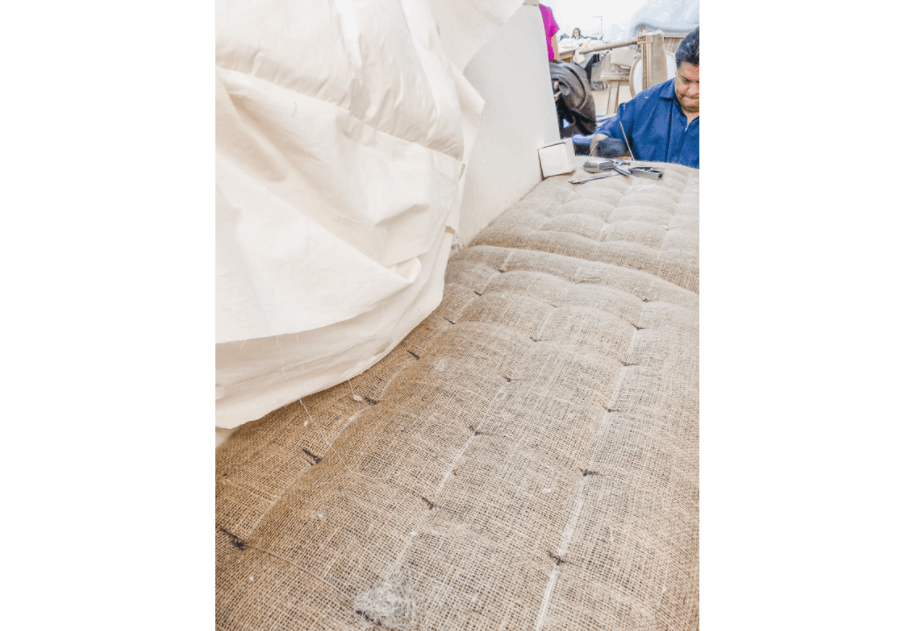
A custom upholsterer tufting the seat cushion of a sofa
It can be very difficult to be able to see the quality of a piece of furniture because a consumer’s first sight is after it has already been upholstered thereby concealing the construction beneath it.
I actually was touring an upholstered furniture factory where they had opened up a chair by a major brand that was supposed have to have used an 8-way hand-tied seat support system. But, once the chair was opened there were only 3 coils that were actually full 8-way hand-tied.
This is one of the reasons professional interior designers are reluctant to use big box/store brands, no matter how popular. We have no idea who, how, or where exactly items were made.
Designers who work with fabric and furniture all of the time, build relationships with vendors that they trust. Many of us visit the factories or small custom shops that create our pieces.
We see firsthand how production is run, who is actually fabricating our pieces. We know management and who to work with if there is an issue. We see how employees are treated and how customers are also treated.
We want to work with those who provide the best value with the most integrity. Notice I said value-not lowest price. Cheap is just cheap. But value is when you exchange something of worth or usefulness for an equal price.
Let’s look at the components that make up a piece of upholstered furniture.
The Frame Material and Construction
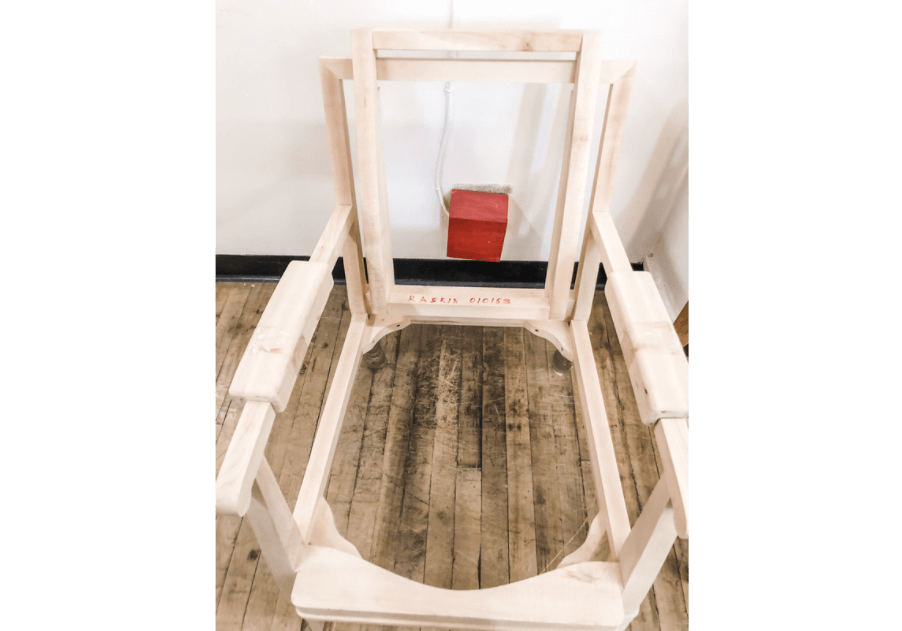
The most obvious place to start is with the frame of the piece of furniture as it is the foundation of all parts going forward.
The best construction technique is using dowels and glue and is screwed, corner blocked, and reinforced to maintain structural integrity. In the photo above you will notice the corner blocks that are screwed in. While you can’t see it, they are glued as well.
Additionally, the following should be considered:
Material:
Kiln-dried maple is usually used in fine upholstery because of its hard and stable properties. Other hardwoods are also suitable. As you notice above, the frame is made of sturdy maple hardwood. Most quality furniture is made from kiln-dried hardwood which ensures its stability and resistance to warping or reacting to changes in humidity. It also allows for joints/joinery to remain tight.
What we do find in many mass-produced pieces of upholstered furniture, even those found in popular chain home furnishing stores, are frames made of plywood. While plywood has its place in construction, it is not desirable in furniture construction.
Aside from lacking in stability and reaction to changes in humidity, plywood is virtually impossible to re-upholster should you want to update the fabric. Many people don’t learn this until they go to reupholster a piece and find that it really can’t be done or worse, it is attempted and with less than stellar results, sends good money after bad.
Even prior to Covid, I would prefer my clients purchase a well-built piece of furniture at auction than by form a big box furnishing store. During Covid, we have seen sales of previously owned furniture spike in demand because of availability and the ability to have it customized by local tradespeople. A well-built piece of vintage furniture is a better investment than a new piece of junk.
Shape:
The overall shape or profile of a sofa or chair is determined by its frame. For example, will the back be curvaceous like a camelback, or is it more tailored and contemporary like a tuxedo sofa?
The shape of the sofa and the frame will go hand in hand and are the foundation of an upholstered piece. If you are “remodeling” a vintage piece, most craftspeople can build up a shape or sculpt as desired. Remember that a quality piece is worth investing in.
Exposure:
The exposure refers to the amount of the frame that will be shown. On fully upholstered pieces, none of the frame would be showing. So, for example, a club chair may not have any of its frame exposed whereas a dining chair made of beautiful hardwood would outline or emphasize its shape. An exposed frame can be seen in traditional period chairs as well as contemporary chairs such as the iconic Eames lounge chair with its exposed wood shell.
Additional parts of chairs and sofas that may be exposed are legs, feet, and arms.
Some chairs with predominantly exposed frames, such as dining room chairs, can take various stains, paint, or lacquer and should be considered in the overall design of the piece of furniture.
Arm Styles:
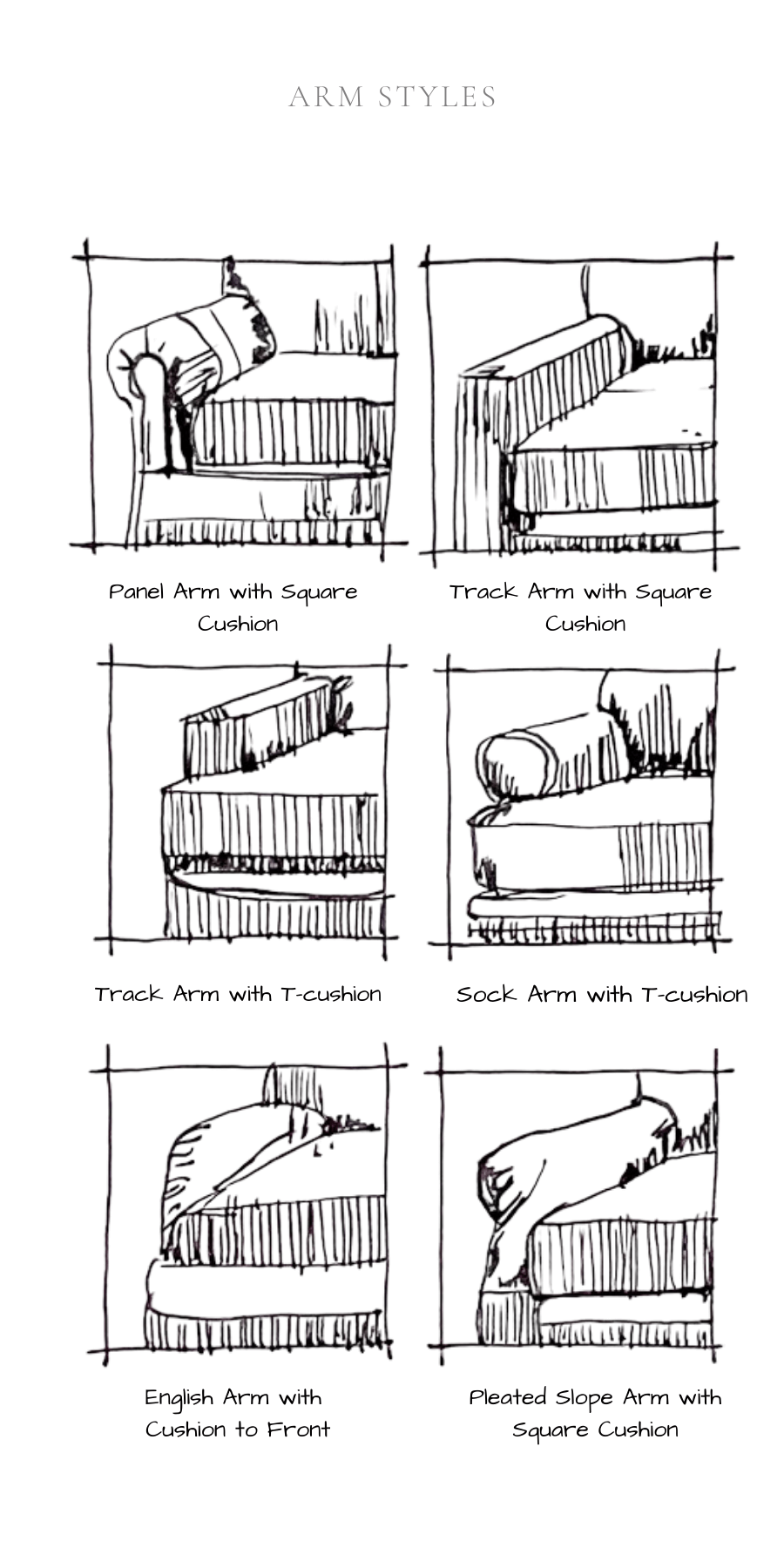
A selection of upholstered arm styles
Arm styles will depend on several factors. The overall style of the room such as traditional vs contemporary. Also, the overall scale of the room is a consideration.
For example, in smaller tight spaces, exaggerated rolled arms may not even fit in the space and make it feel too crowded.
The other factors to consider in regards to the arms are the shape, rounded, curved, paneled etc.. and the overall arm style. Below are some examples of arm styles.
Foot Styles:
The two basic ways that seating can be supported are by a base or foot. This choice is informed by the style of the chair or sofa and by its function.
I am sure we have seen very delicate feet that visually don’t look like they could support a large man. Also as we discussed exposure above, a chair with a totally exposed frame will have the foot as an integral part of the frame.
Below are some examples of foot/base styles. As you can see, some are more traditional and others more contemporary.
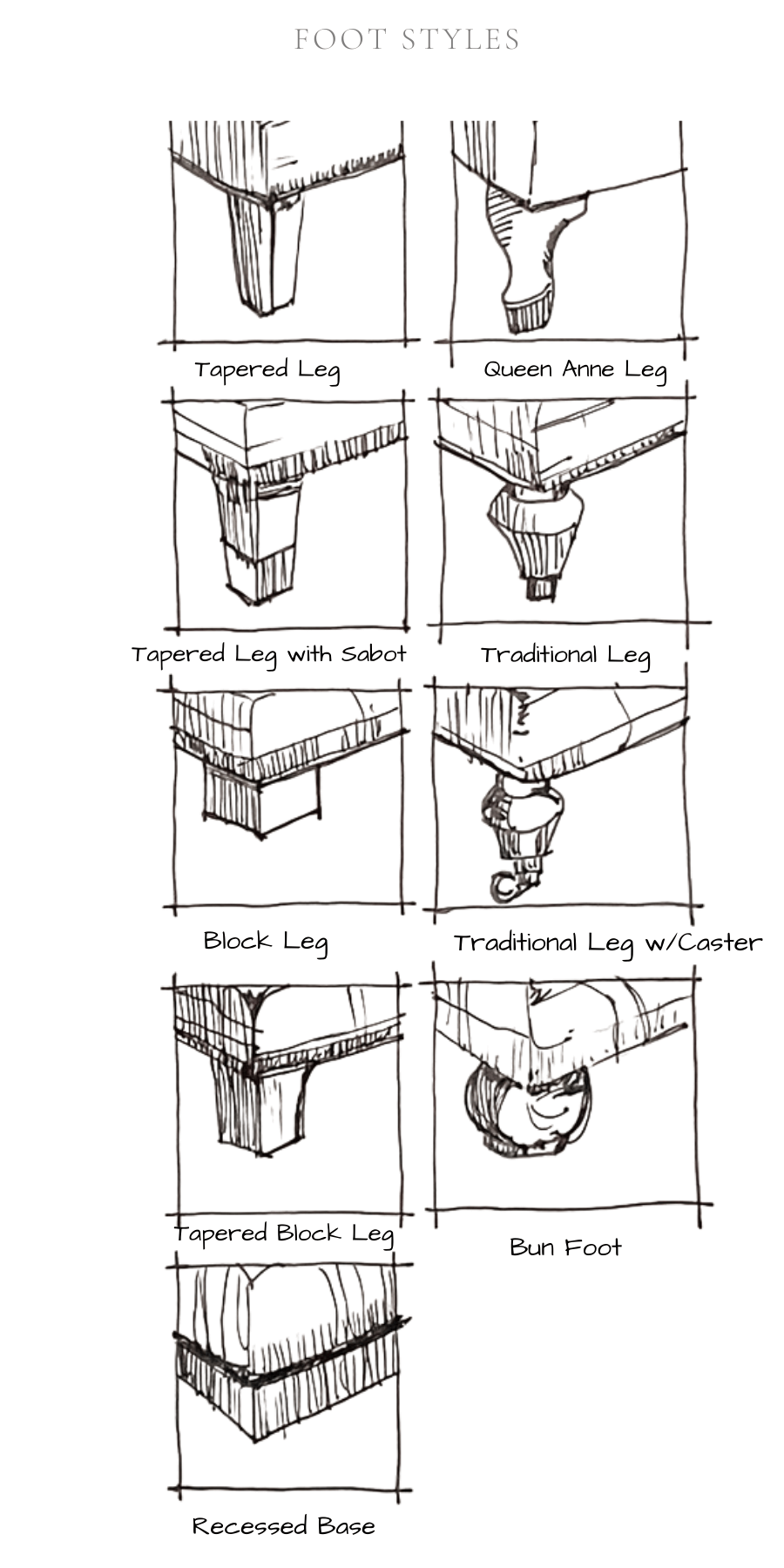
A selection of foot styles
The Overall Sofa or Chair Body
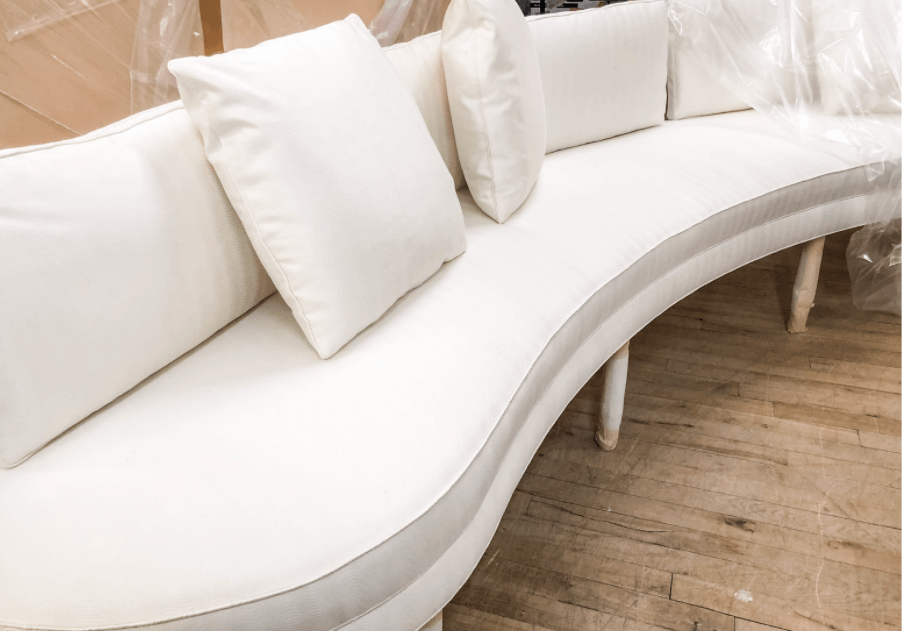
In general, an upholstered piece is either tightly upholstered with exposed feet or skirted along the bottom, hiding the frame and feet completely. There are a variety of skirt styles from tailored to ruffled, welted or trimmed, or any variation.
Another important consideration is the seat cushion and back cushion systems.
Back cushions can be square, rectangular or T-shaped
Additionally, there are other cushion construction details to consider. The following applies to the pillow back or seat cushion part of a sofa or chair.
Tight back: The inside back of the piece is padded and upholstered, without any pillows at the back. This type of upholstery can be further detailed using tufting, channeling, or button tufting.
A tight-back sofa or chair generally provides a firmer feel and a more tailored or contemporary look.
Loose cushion:
These are larger back pillows that are not attached to the frame. The good thing about this type of pillow, removable covers can allow for cleaning or replacing the covers if needed.
This is true with loose seat cushions and removable covers as well. I find this type of cushion to be very practical from a cleaning standpoint but will need occasional “fluffing” to keep its shape.
Many times I will order extra covers for heavy use areas such as family rooms with kids and pets or vacation homes.
Semi-attached: These back cushions give the appearance of being loose but are actually sewn in place to give a neat appearance
Pillow back: Multiple large throw pillows arranged along the back of the sofa, instead of an actual back cushion, give a casual yet layered look. This design gives the softest and most casual look.
Again, making sure the pillow covers have zippers and are removable, will make cleaning easier. Also, this is another instance that ordering additional covers in case of spills or stains can be a great idea in high-traffic areas.
The Seat and Deck Construction:
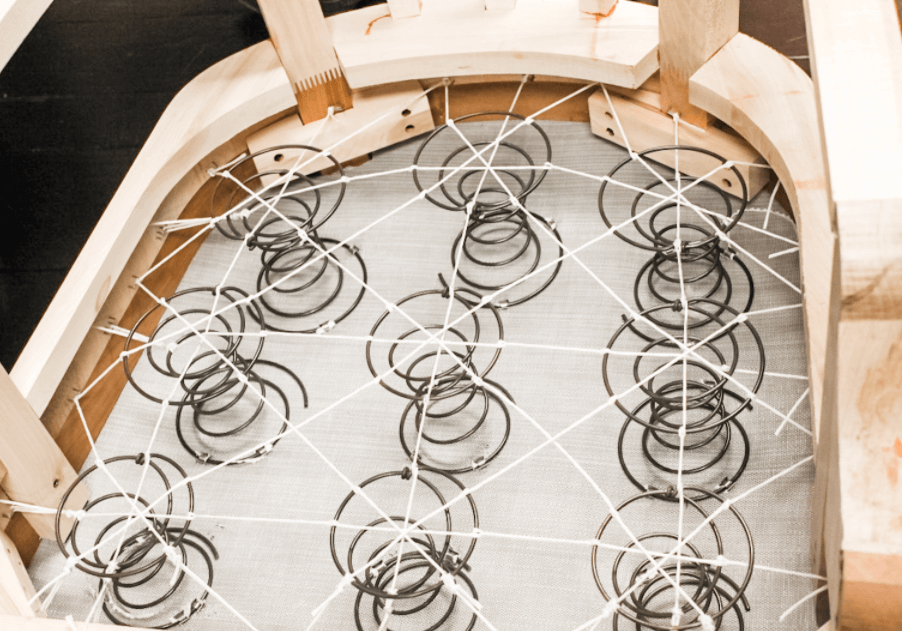
An example of a high quality 8- way hand tied seat construction
The photo above illustrates the classic high-quality 8-way hand-tied seat construction. If you look closely, you can see that each coil is tied in 8 directions and connected to the frame. This type of construction prevents sagging and maintains comfort in the seat for a long time to come.
Certain types of pieces may have a “web” decking which looks similar to the webbing on the chair below but is used at the seat with the coil springs above it
The piece is wrapped in layers of dacron/stuffing and covered with muslin In the photo below, the upholsterer is layering synthetic horsehair over the arm frames to soften the arms for comfort.
Seat cushions are another area that can be personalized depending on preference. It is always a balance between a luxurious feel and comfort.
A little bit of down and waterfowl filling can be very comfortable but 100% is uncomfortably soft and heavy. They need lots of maintenance if you have ever had the experience of trying to “fluff” them!
A mix of 80% down, 20% feathers over a center foam core are the preferred content for both seatbacks and cushions. There are many ways to add a luxurious feel to this 80/20 mix involving wrapping the fill.
If it is a seat cushion that will get a lot of use (like a family room sofa), consider an innerspring system wrapped in high-density foam and wrapped again in pads made of polyester and down (think mattress!)
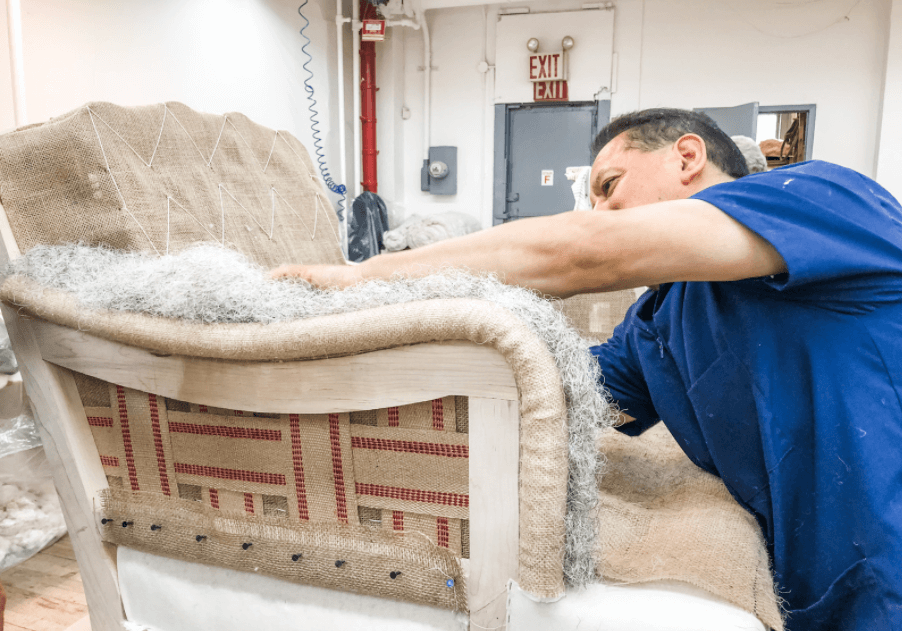
An artisan upholsterer adding layers of padding to a custom arm chair
The Fabric Type and Construction
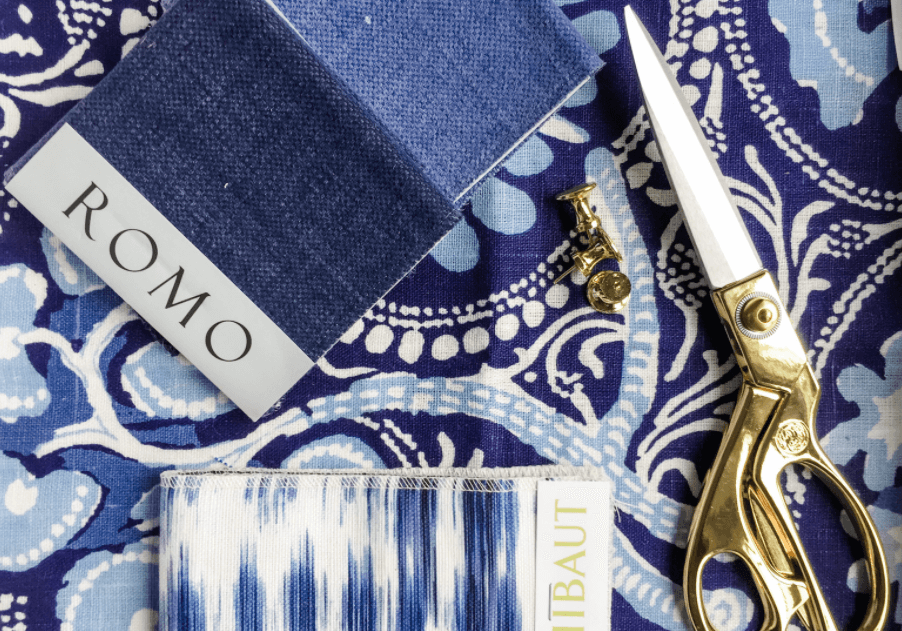
The choice of fabrics is determined by the over all design and function of a piece of furniture
Fabrics all have functional and performance requirements in addition to working aesthetically with the piece that they will be upholstered on. Fabrics that you would use in a formal, rarely used living room would be different in a family room or vacation house.
There are many testing/ test methods that are used for commercial fabrics and recently some residential fabrics also have testing performance. marked on them.
The large overarching categories of fabric performance are abrasion, stretching, and staining.
Testing for stretching is to make sure that a fabric has enough dimensional stability so that it stretches around the frame but doesn’t overstretch and become “droopy”. Many times this can be remedied by applying a backing to stabilize the fabric.
The most common performance testing is for abrasion. Fabrics are tested for their ability to withstand abrasion without wear or pilling.
The other broad area for durability is stain resistance. Some fabrics are naturally stain-resistant, like acrylic outdoor fabric. Others are treated in the manufacturing process to resist stains. And finally, there are surface treatments that can be applied to the fabric after construction to help resist stains.
There are a variety of natural fibers that are great upholstery choices as well as synthetics and synthetic blends. There are many pros and cons to each and the best selection will depend on where it will be used, the environment, the level of maintenance commitment, and budget.
Any Special Details
In addition to the elements we have discussed, any special treatments, trims or customizations can reflect the quality of a piece. Is there trim or welting? Are there nailheads or other decorative hardware?
Is there use of Paaementerie, or decorative trim? This type of application was used to hide seams and tailoring details in the thirteenth century but now are is used as a decorative treatment.
This can be quite expensive but a little can go a long way. For example, using just a bit on throw pillows or bolsters or as a tape edge on a sofa skirt.
Adding these touches can make a piece truly custom and give a bespoke feel to a room
This is a big topic and I hope that I have given you a bit of a primer for choosing quality upholstered goods. Please feel free to email me if you have any other questions. Also, I have created a checklist that you can use when shopping for furniture.
How about a Complimentary Upholstered Furniture Checklist?
You can use it as a guide when you are looking to purchase furniture