What Travel Teaches Us About Home
Good taste is the ability to recognize beauty. It is not the same skill as knowing how to build it.
Good taste is one of the most valuable things a person can bring to an interior design project. The ability to recognize quality, discern proportion, and know instinctively when something is right — these are not small gifts. But they are not enough on their own. And understanding why is one of the most useful things a homeowner can do before beginning any significant design project.
Most of my clients have excellent taste.
That is not a compliment I offer lightly. I mean it literally. They know what they love. They can walk into a room and feel immediately whether something is right. They've traveled enough, read enough, lived enough to have a genuine point of view.
And yet they come to me with homes that disappoint them.
Not embarrassing homes. Not poorly furnished homes. Homes that look considered and cost a great deal and still, somehow, don't feel like enough.
One client — someone who had designed and redesigned the same property twice before we met — said something I've thought about ever since.
"I keep thinking if I just find the right pieces, it will finally click."
She had found many right pieces. Her eye was impeccable. The problem was never the piecesIt happens because of how the process started.

Good taste — real taste — is the ability to recognize quality, elegance, proportion. To walk into a room and know. That is not a small thing. Most people never develop it.
But recognition and creation are not the same skill.
You can have a perfect eye and still not know how to build what you're seeing. Taste tells you what you're drawn to. It does not tell you why a room feels unresolved even after you've added the thing you were certain would fix it. It doesn't tell you that the proportions were off from the beginning, or that the layout is working against you, or that the light in that room at four in the afternoon makes everything feel slightly wrong no matter what you put in it.
Taste recognizes. Design builds.
Those are genuinely different skills — and the design world has done a poor job of making that distinction clear. Partly because taste is visible and design thinking is not. Partly because the industry has a financial interest in keeping you shopping.
"Taste recognizes. Design creates”."
But the gap between a beautiful room and a resolved room is not filled with more beautiful things.
It's filled with decisions that most people don't know to make.
Where the eye should land when you walk in. How the scale of each element relates to the architecture around it. Whether the room is asking you to do something — sit, move, gather, rest — or simply asking you to look at it. Whether the function has been solved so completely that it disappears, and what's left is just ease.
These aren't personal opinions or subjective preferences. They're principles — the kind that have governed beautiful spaces for centuries, long before anyone had an Instagram account. They don't change with trends. They don't care what's popular this season. A room either has them working in its favor, or it doesn't — and you feel the difference even when you can't name it.
That is not something you can scroll your way to.
This is where even the most discerning clients get stuck. They've been told — implicitly, constantly — that taste is the whole game. That if you just develop your eye enough, the rest will follow.
It won't.
What Comes After Taste
What follows taste, when it's working, is judgment. And judgment requires a framework that goes beyond personal preference. It requires understanding proportion, spatial flow, how architecture and interior relate to each other, how a room needs to function before anyone starts talking about fabric.
The good news — and there is real good news here — is that taste is actually the hardest part to teach.
The rest can be learned. Or it can be led.
My client with the impeccable eye and the twice-redesigned room? Her home is finished now. We didn't start with what she loved. We started with what the room needed. Once that was solved, her taste — which was never the problem — had somewhere real to land.
She walked through it on the last day and was quiet for a long moment.
"It finally feels like me," she said. "I don't know why it didn't before."
It didn't before because taste alone was doing a job it was never meant to do.
Give it the right foundation, and it does something extraordinary.
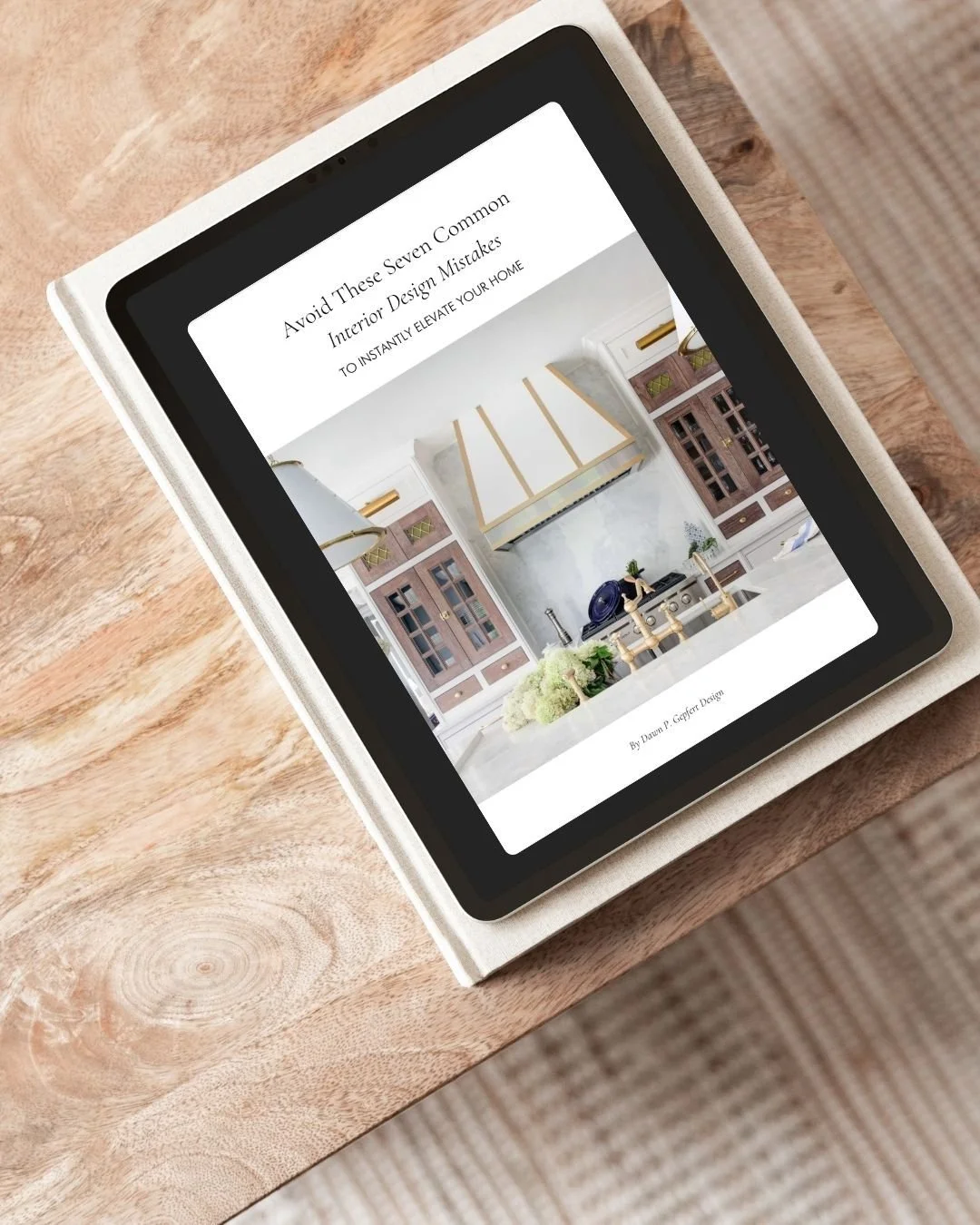
Get our free copy of ”Avoid These Seven Common Interior Design Mistakes, to Instantly Elevate Your Home”