Not a Tourist. Mostly. — Marqués de Riscal
Before there was the rendering, there was a line.
Before the Rendering, There Was a Line
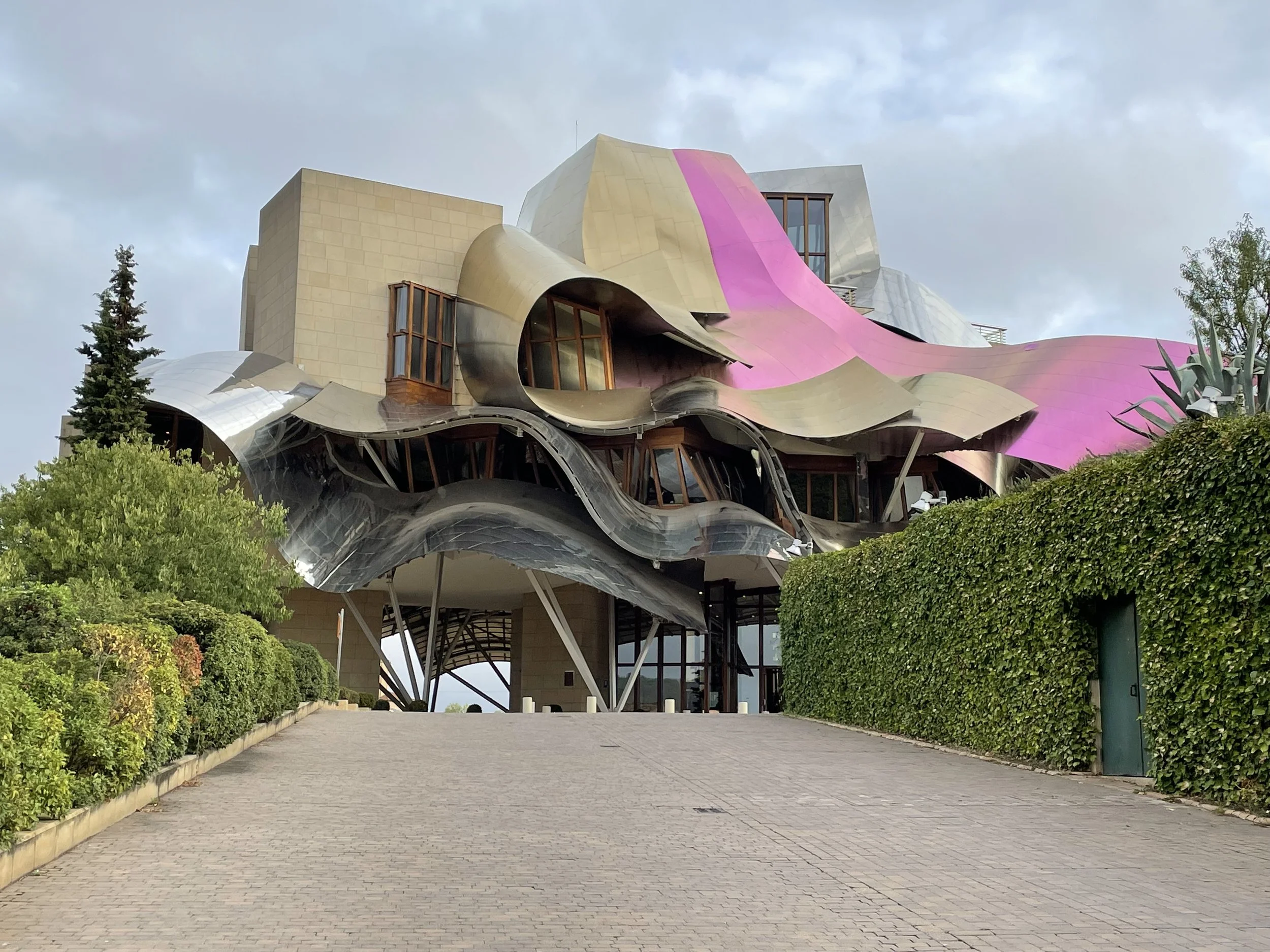
The first photo is the iconic one — Frank Gehry’s Marqués de Riscal Hotel in Rioja, Spain. And yes, it is stunning. Fascinating to explore in relation to its site, the titanium ribbons shifting from pink to red to copper depending on the light and the hour.
But as I wandered the property — which includes not only the hotel but the winery — I kept coming back to a wall.
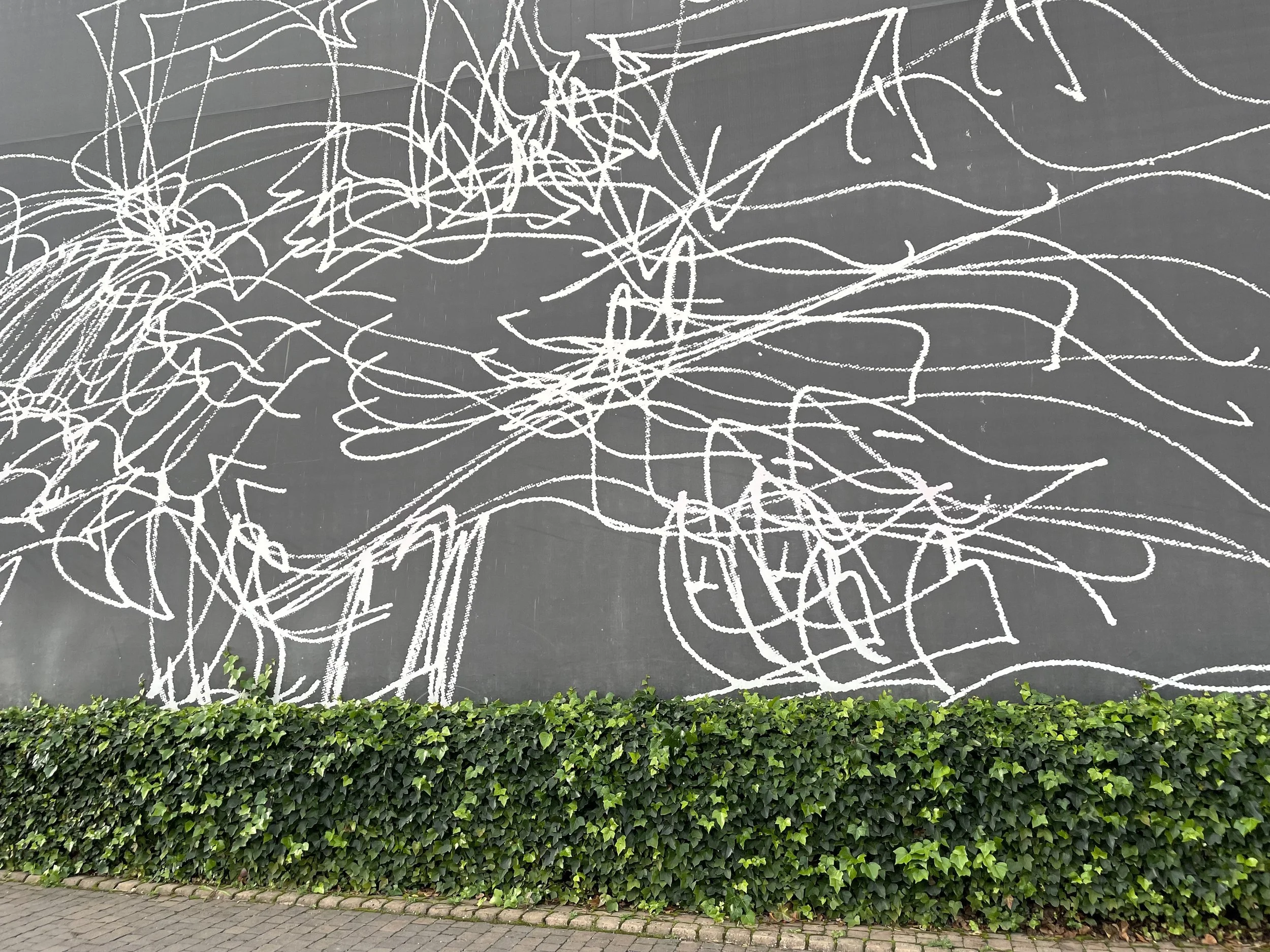
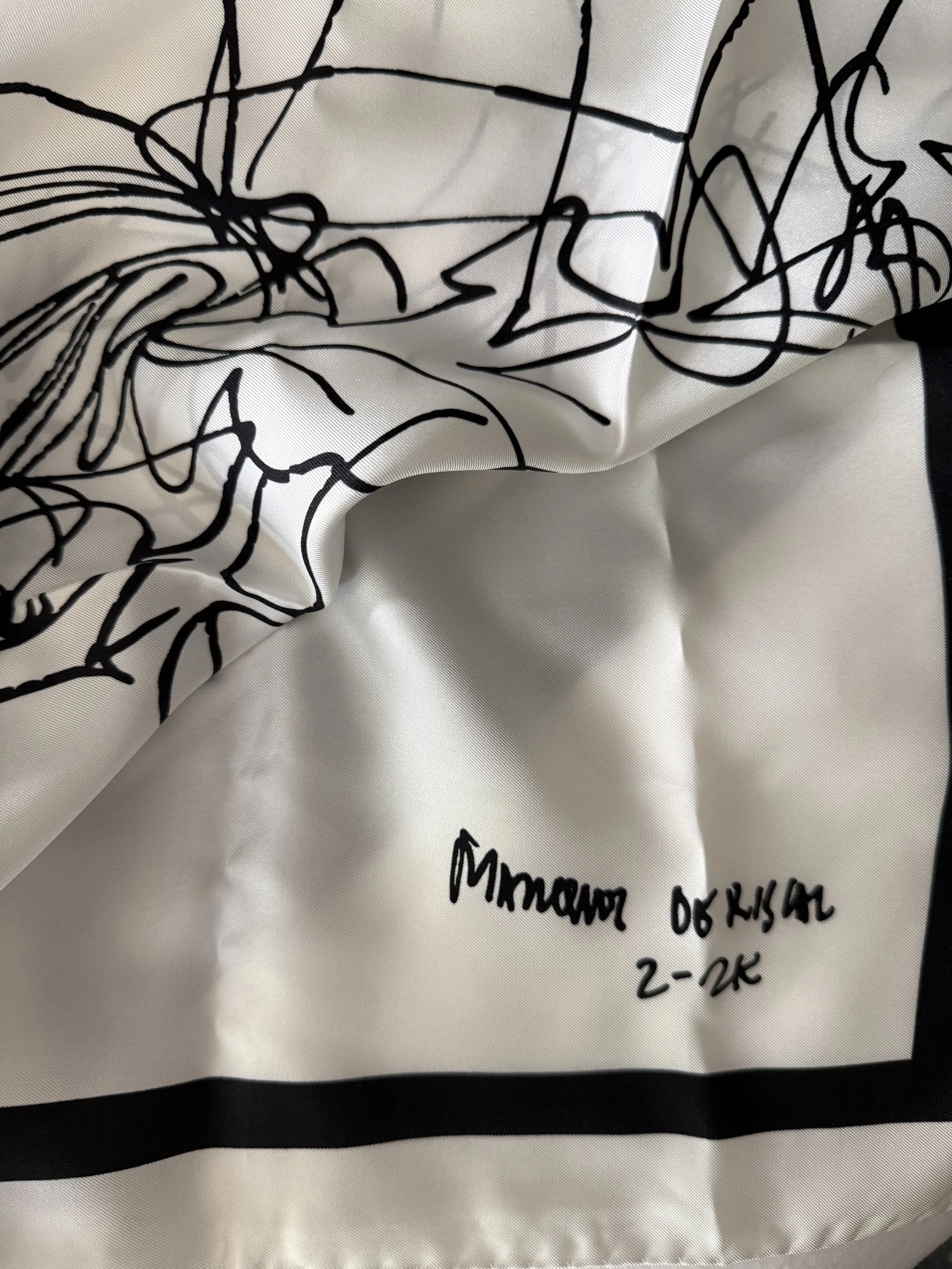
A black matte exterior wall. Rectilinear and plain. And on it, enlarged to monumental scale, a loose organic scribble in white. Strong graphics, strong contrast. I loved it immediately — enough to buy a silk scarf with the sketch printed on it.
It wasn’t until later that I learned what it actually was. An early sketch. Gehry’s own hand, from the conceptual phase of the project. The scribble that started everything.
That’s what stopped me. Not the titanium. The line.
What the sketch actually does
This is not a practice unique to Gehry. Early loose sketches are how most serious design thinkers begin — and for good reason. They allow unencumbered iteration. They silence the internal critic that wants to evaluate an idea before it has had time to breathe, to grow, to become something.
It gets the unfinished thought out of your head before your brain has time to edit it. No preconceived notion survives contact with a loose messy line on paper. You’re not drawing what you know — you’re drawing what you’re trying to figure out.
Adjacencies. Block planning. How people move through a space. Massing. Volume. None of that needs to be pretty. It needs to be honest.
What happens between the brain and the hand
Something happens in that connection that a mouse simply cannot replicate.
When you’re sketching, you’re not inputting a decision — you’re discovering one. The line goes somewhere unexpected and you follow it. You cross something out and the crossing out tells you something. You’re working strictly in the abstract. There are no walls, windows, or doors yet. There are spaces, masses, passageways, orientation.
You draw something and immediately know it’s wrong — because your hand felt it before your brain caught up.
A keyboard executes what you already decided. A pencil helps you decide.
That distinction matters enormously in a creative process. It’s exactly what gets flattened when we move too quickly to digital tools — the thinking that only happens in the friction between hand and paper.
What gets lost when we skip it
The full exploration of what actually works — or could work — disappears when we jump to a solution before we’ve defined the problem.
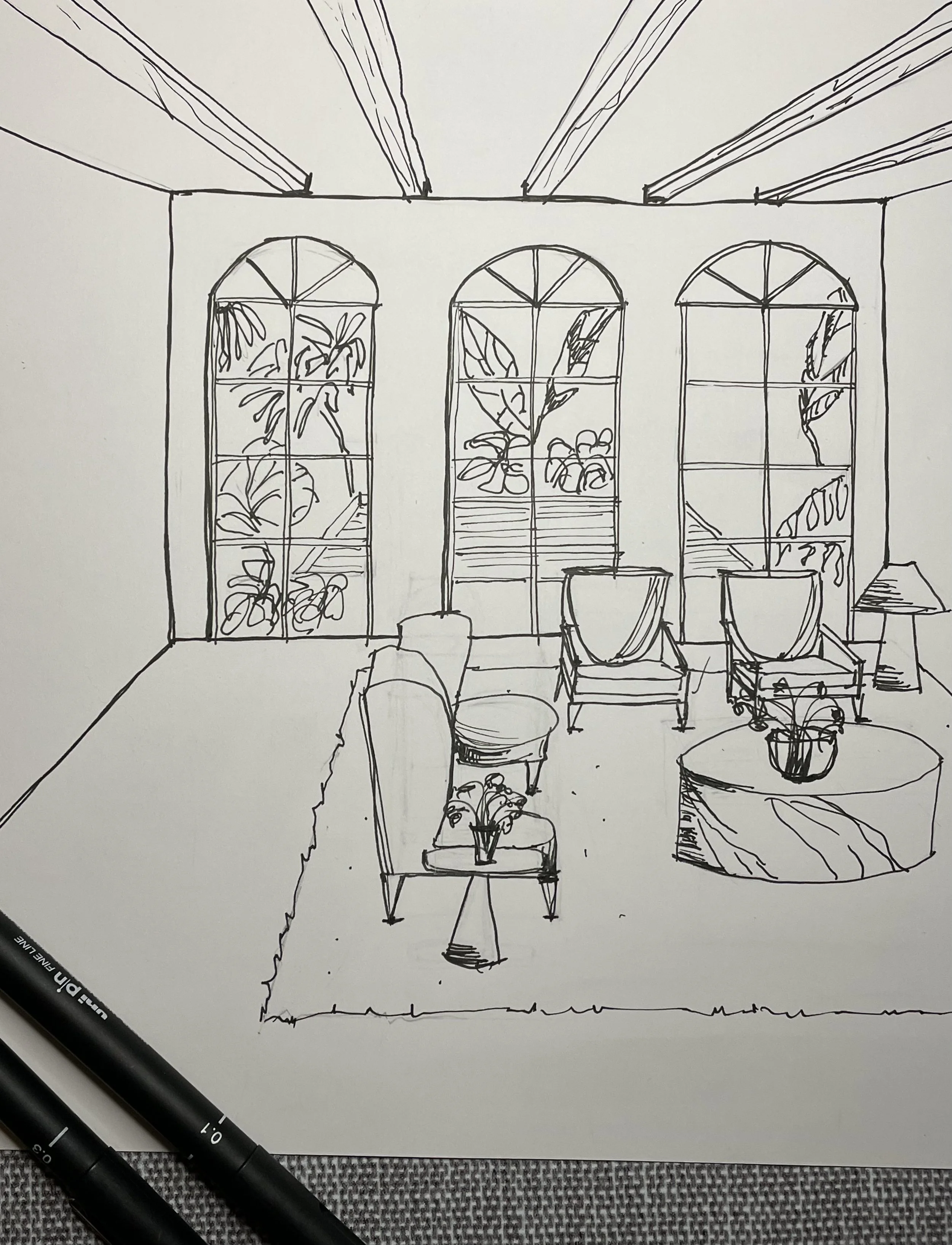
This is the part of the process that’s hardest to explain. Clients understand deliverables. Renderings, construction documents, samples, cut sheets — things they can see and touch and respond to. But those are the result of all the squiggly lines that came before them. The squiggly lines are not the amateur version of the process. They are the process.
Without that early exploration, designers can rush to a solution that isn’t the right one.
And clients who see a polished rendering too early grip onto it. I’ve had clients fixate on an accessory I threw in as a placeholder — something incidental, never meant to be permanent. But once they saw it rendered beautifully, it became real to them. The idea calcified before it was ready. Iteration became negotiation. Feedback became defense. The design stopped moving.
The sketch keeps everything fluid long enough for the right idea to emerge.
Thanks for reading The Considered Home! Subscribe for free to receive new posts and support my work.
The magic of the reveal
There’s another cost to skipping the process — one that shows up at the very end.
I’ve produced documentation so precise it nearly matched the final space exactly. And I’ve watched the surprise leave a client’s face because they already knew what was coming. That moment — when someone walks into a finished room for the first time — is irreplaceable. It’s what the whole process builds toward.
The sketch protects that moment. It keeps the vision yours until it’s ready to be theirs.
Final Thoughts
Designers broker in visual thinking. Just as writers work through ideas in words, we work through ideas in line and form.
The sketch isn’t a primitive version of the rendering. It’s a different kind of thinking entirely. One that the rendering can’t replace — and that AI definitely can’t replicate.
I still have the scarf. It hangs where I can see it — a reminder to start without answers. To let the line go somewhere before I decide where it’s going.
Gehry knew that. That’s why he put it on the wall.
Get our free copy of ”Avoid These Seven Common Interior Design Mistakes, to Instantly Elevate Your Home”