Story or Receipt: The Difference Between a Collected Home and an Accumulated One
Curating a home with intention.
The Menu on the Wall
One of the objects I loved most, visiting friends, was the collection of sentimental menus framed in their kitchen. Something I wish I’d thought of myself. There were menus from their honeymoon, their first date, occasions I never fully learned the story behind.
One of them had no monetary value. It wasn’t signed. It was from a dinner in Venice that ran long, the kind of evening where nobody wants to be the one who stands up first, and at some point the menu came home with them, and at some later point it went into a frame, and now it hangs where they see it most days. It is, by any appraiser’s measure, paper. It’s also the most successful object in the room.
I think about that menu when clients apologize for their things. And they do apologize, walking me through their own homes, narrating like a defense attorney. We’ve had that forever. I know the lamps don’t go. That was my grandmother’s. Somewhere along the way, design-aware people absorbed the idea that a professional walks in wanting a clean slate, and that everything with history is a liability waiting to be tactfully removed.
Thanks for reading The Considered Home! Subscribe for free to receive new posts and support my work.
The Cups
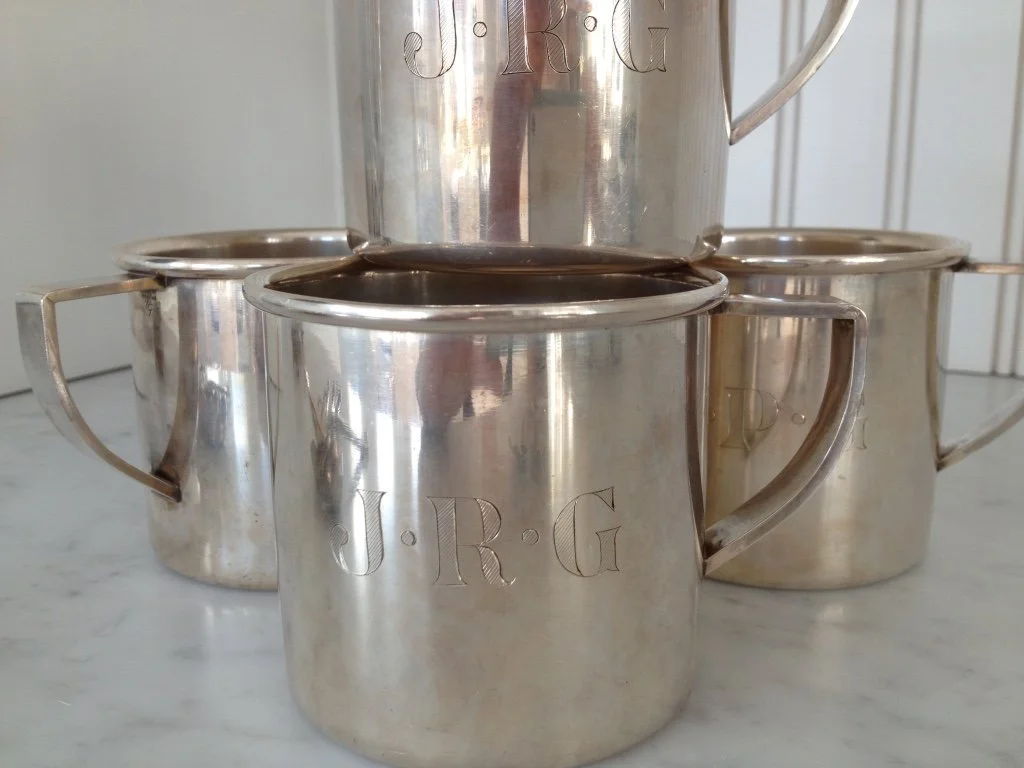
My most treasured pieces include artwork my children made growing up. And the silver cups pictured above, from years of vacationing at a dear friend’s family ranch in Jackson Hole. Her grandfather bought the ranch in the 1940s.
One of our favorite things to do was have cocktails on the front porch of the main house and listen to the elk bugling in the front meadow. Cocktails secured in beautiful, functional, monogrammed silver cups stayed icy cold for hours. Not that they were ever empty long enough to test it.
My friend and I used to muse about having a set made for our own homes. After much searching, she found a jeweler who could fabricate them. She bought a set for herself and her husband, and a second one, quietly, meant as a surprise for their anniversary. Unbeknownst to me, my husband had placed an order of his own.
Our friend passed away very suddenly, before she could give her husband his surprise. The cups stayed hidden in her closet. I retrieved them so they could be shared when he was ready.
My own set, the one my husband had commissioned in secret, reached me months later. I cannot tell you how touched I was to receive them. They are one of my most treasured possessions, and I love using them. I always tell the story: our friend, and Muffy and Big Dad.
The Test
So let me say this plainly. The problem is never that you have things with history. The problem is when you can’t tell the difference between history and inventory.
“A collected piece carries a story you’d still tell. An accumulated one just carries a receipt.”
That’s the only test that matters, and it has nothing to do with age or price. The menu cost nothing. Plenty of expensive things fail it instantly. It’s whether the piece still says something true about you, or only proves you once went shopping.
Your grandmother’s chest passes. The painting from your first trip to Paris passes. The menu passes, embarrassingly well. The console you bought in 2016 because the room needed something and it was in stock? Run the test. Be honest. You already know.
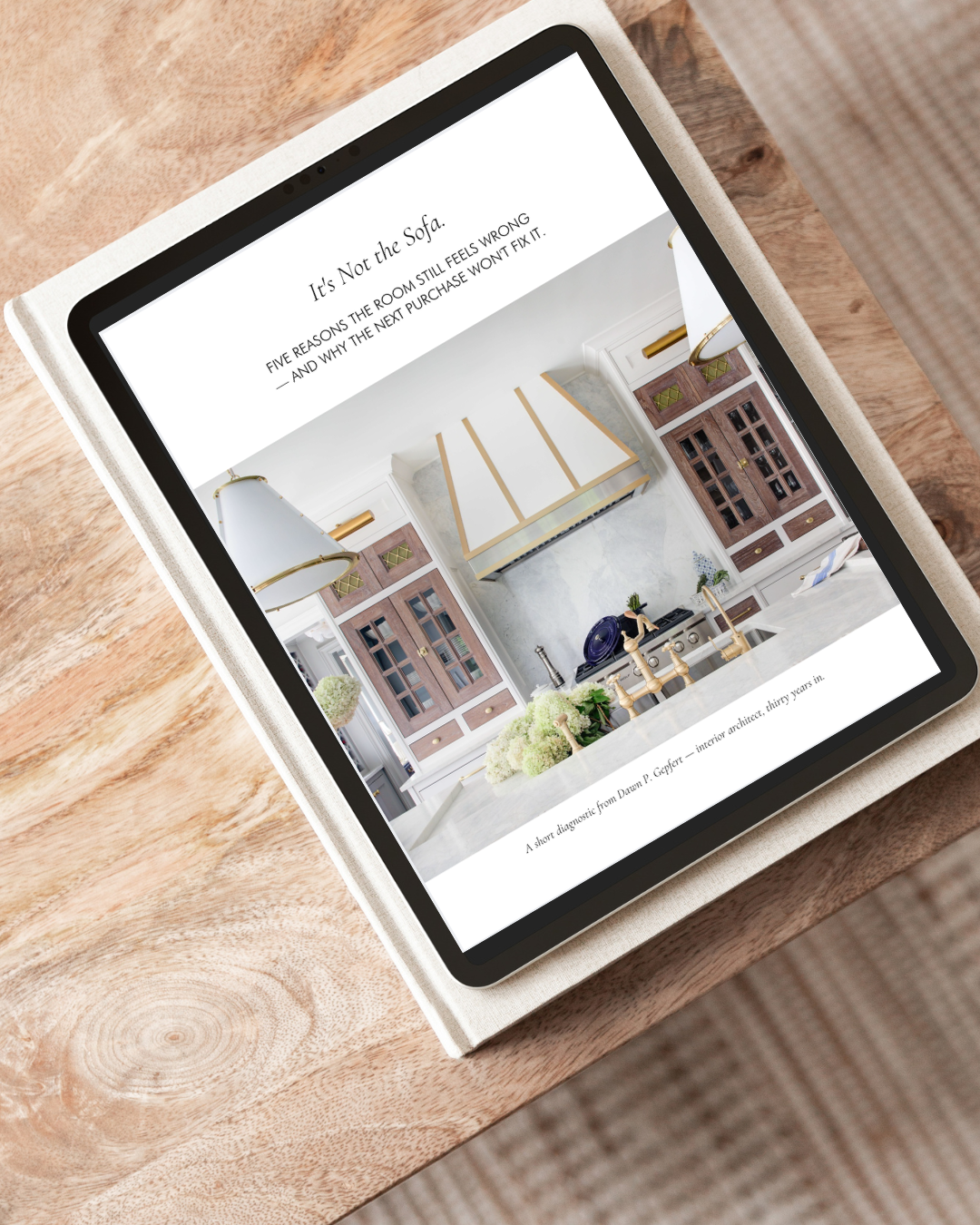
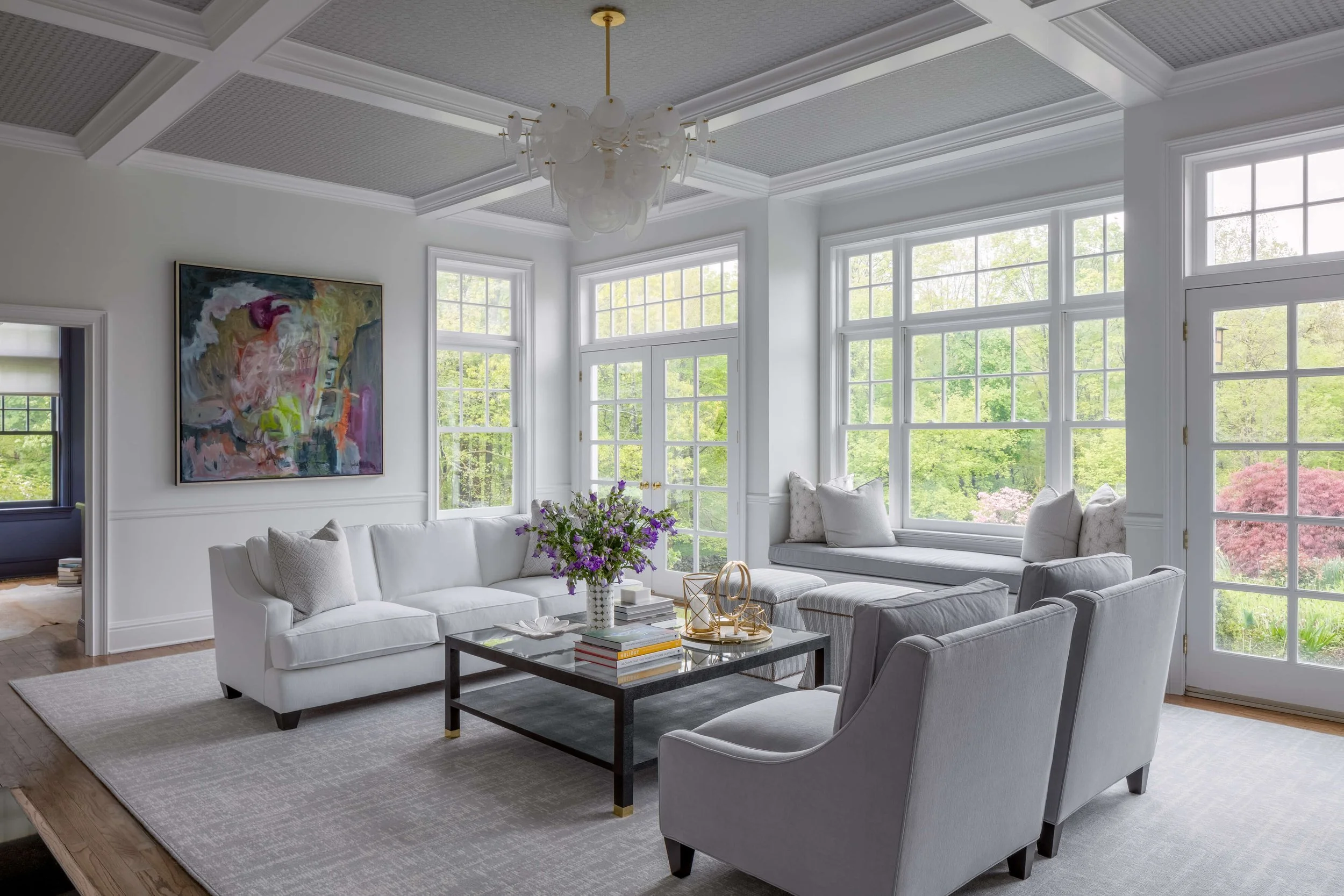
This matters most in the rooms I wrote about in It’s Not the Sofa , the ones that read as a timeline instead of a home, where every piece can tell you when it arrived and none of them can tell you why it stayed. The instinct, once you see it, is to swing hard the other way: clear it all out, start clean, buy the put-together room in one pass at HomeGoods. And that room, I’ve seen it, is coherent, and finished, and strangely mute. All new things have the same story, which is to say none.
Editing, Not Loss
The rooms that stop people mid-sentence are almost never all-new. They’re edited. Curated. Built around the pieces that earned their place, the chest, the painting, the paper menu, with everything else answering to them. The collected pieces aren’t obstacles to the design. They’re the brief. They tell me who lives here before you’ve said a word, and my job is to build a room where they stop being survivors of previous decorating schemes and start being the point.
So no, I don’t walk in wanting a clean slate. I walk in looking for the menu on your wall. The thing you’d grab in a fire. Show me that, and I know what the room wants to be.
Everything else, we run through the test. Some pieces will make the case. Some won’t.
That’s not loss. That’s editing.
The test is free, you just read it. Running it on a whole room, with trained eyes and thirty years of practice, takes about an hour: Essenza Ora .
And if you haven’t read It’s Not the Sofa, the five reasons a finished room still feels wrong, it’s here.
Get our free copy of ”It’s Not The Sofa”