Before the Surface:What Antolini Taught Me About Where Beautiful Things Begin ·
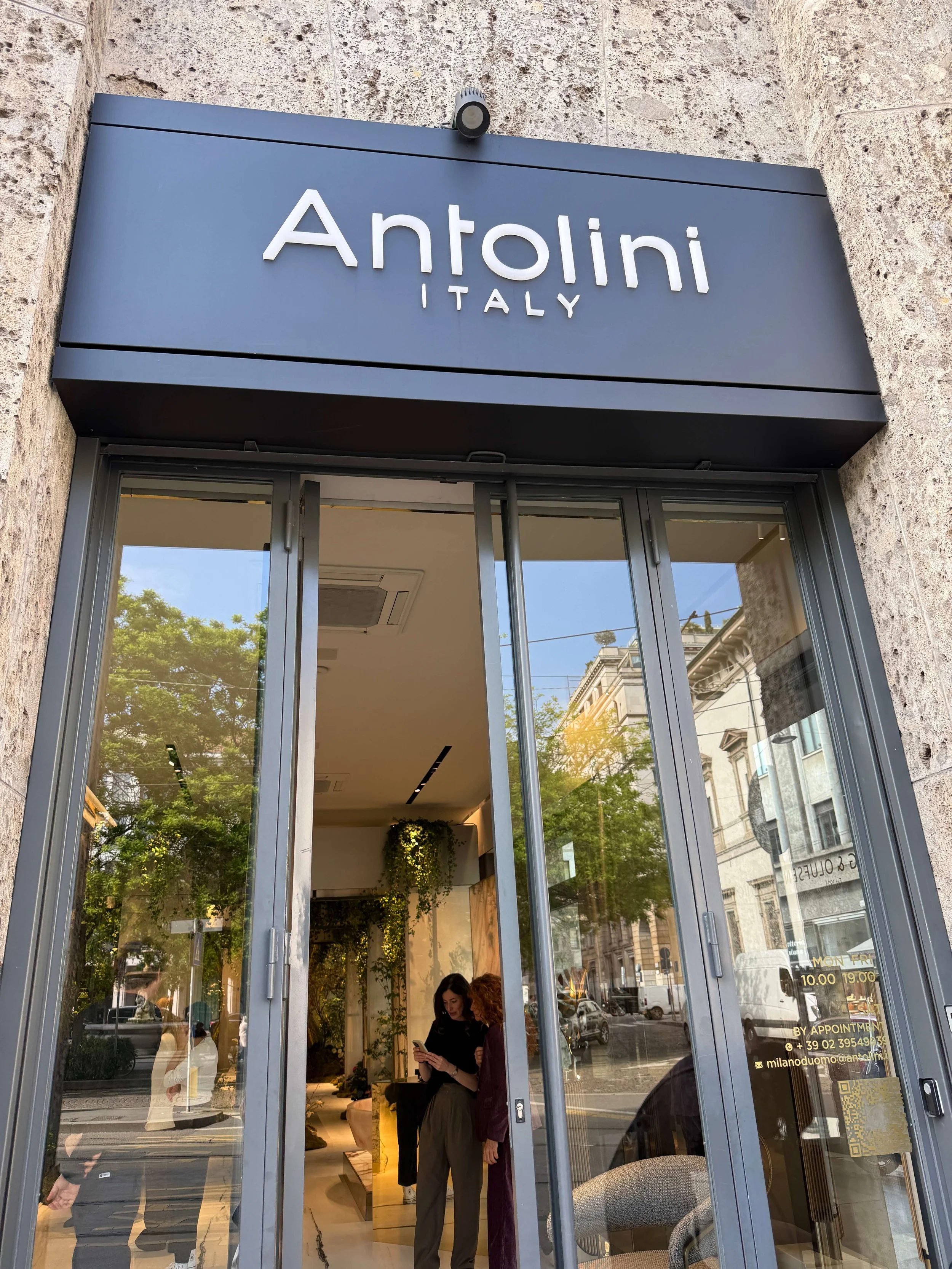
Antolini Stone Room, Piazza Fontana, Milan · Milan Design Week 2026
Why Good Taste Is Not Enough
When Abundance Becomes the Problem
Carrara is a magnificent stone. Ancient, luminous, the material of Michelangelo and centuries of Italian craft — I’ve driven through those mountains and seen the abundance of it, white stone as far as the eye can reach. It is also everywhere. And we have, if I’m being honest, Instagrammed the shit out of it.
When every house flipper, DIY designer, and spec home builder uses it on every surface, it loses its luster. When everyone has access to the same material, the material loses its power to say anything specific about the person who chose it.
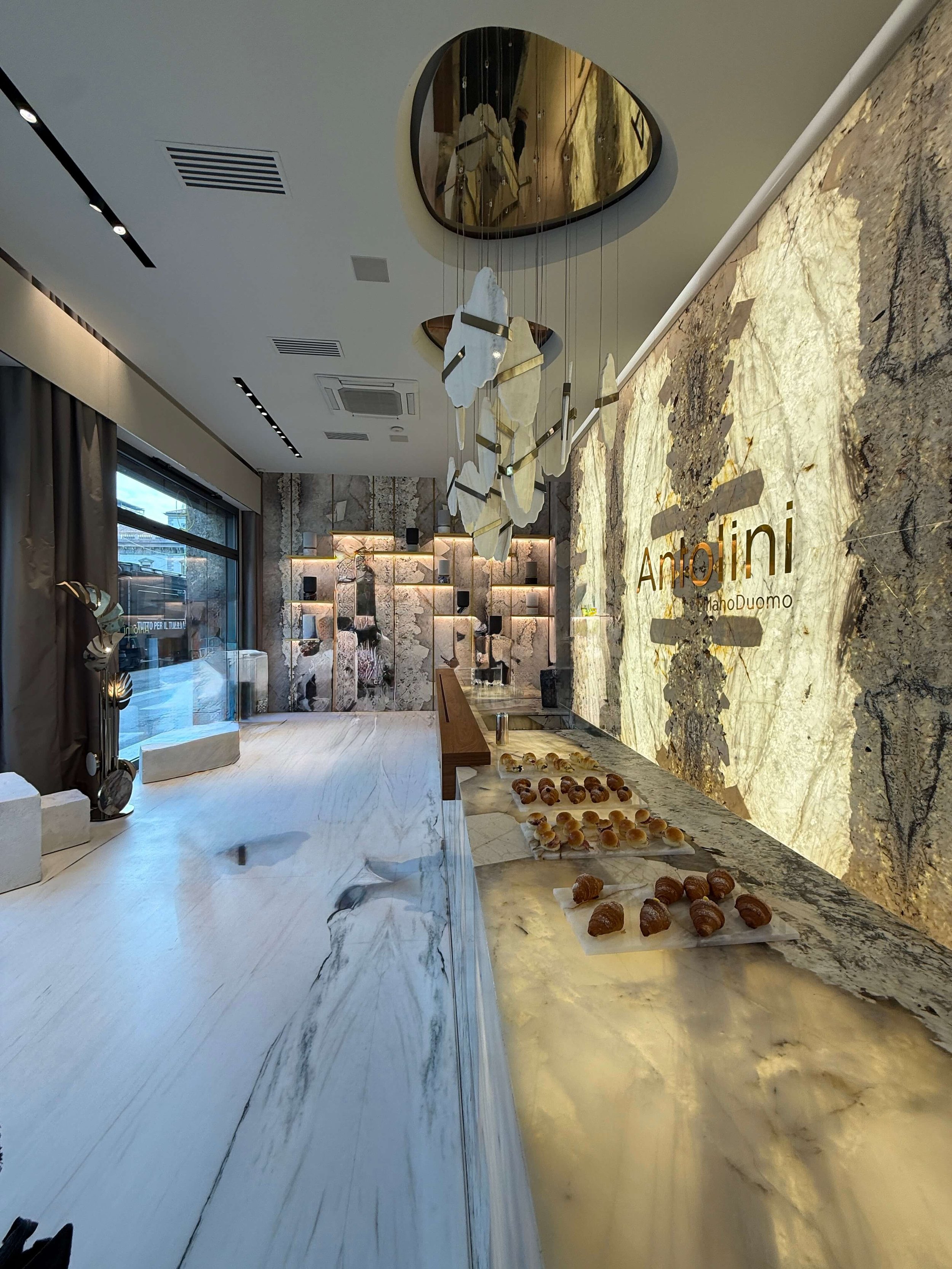
It was early morning during Milan Design Week and I was in desperate search of a cappuccino before our private showroom tour at Antolini. The showroom sits on Piazza Fontana behind the Duomo — which tells you something about how they think about what they do. The reverence of the location and the reverence for the stone and the technique were on par. Thankfully, they were serving coffee from a stone counter. Of course they were. It is always impactful to see function executed in a beautiful way.
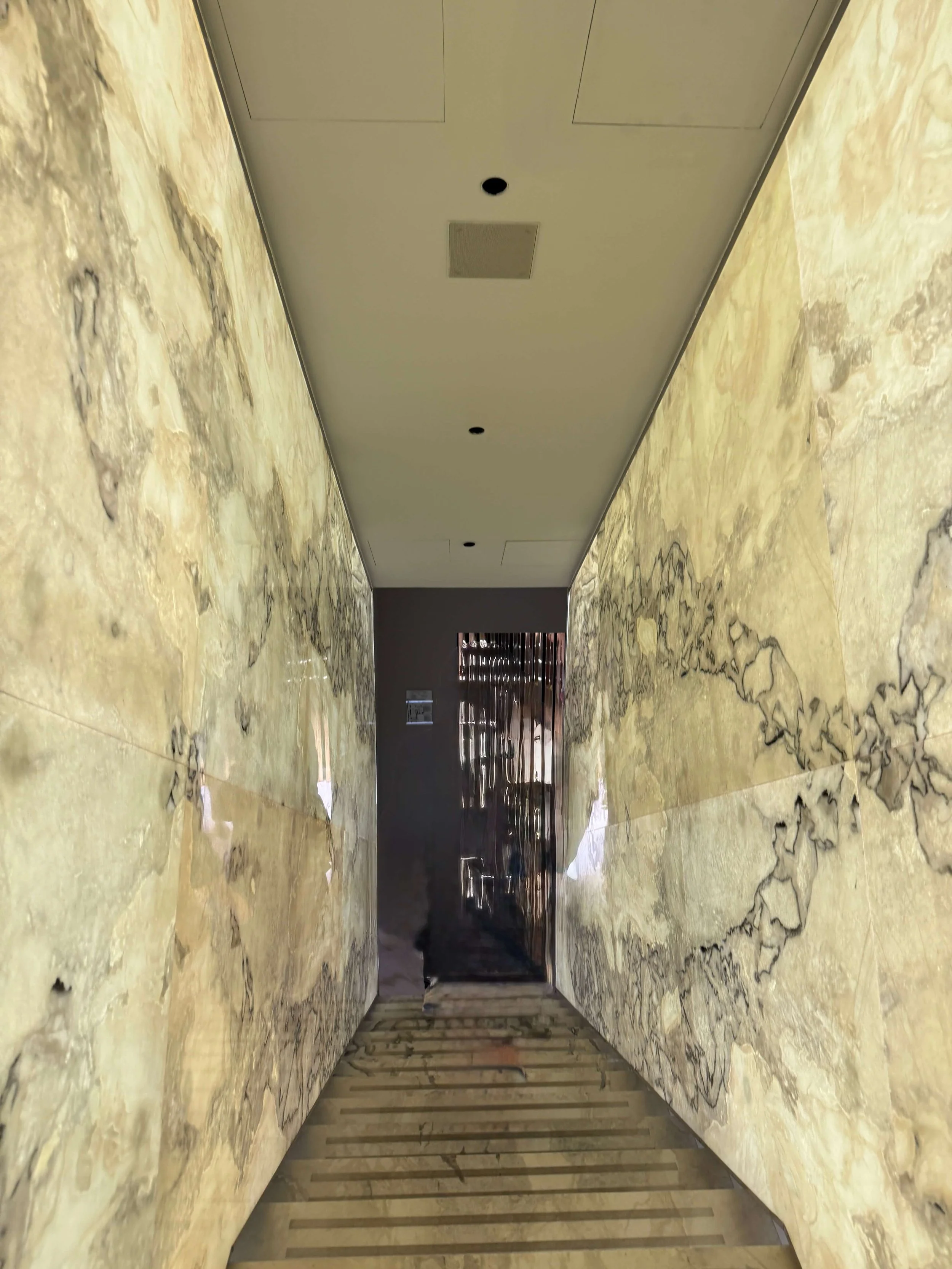
Behind the stone counter was a backlit stone. To see this technique in person is quite breathtaking. To see something so strong and solid shown as delicate and ethereal really changes the perception of the material. Stone is supposed to be opaque. Permanent. Immovable. Backlit, it becomes something else entirely — fragile, luminous, as if the weight of it has been suspended. The veining that was always there becomes radiant. The internal logic of the material reveals itself fully for the first time. The overall experience of my morning cappuccino served against such an elegant backdrop was, well, very Italian. Specifically, Milanese. Of course it was.
· · ·
Moving through the space I came upon an incredible installation — a rosy colored stone with the face of a woman emerging from the veining. It was created by an artist who used the natural veining in the stone to describe the image, with the exception of possibly one or two lines. Nature had drawn it. Millions of years before anyone thought to look.
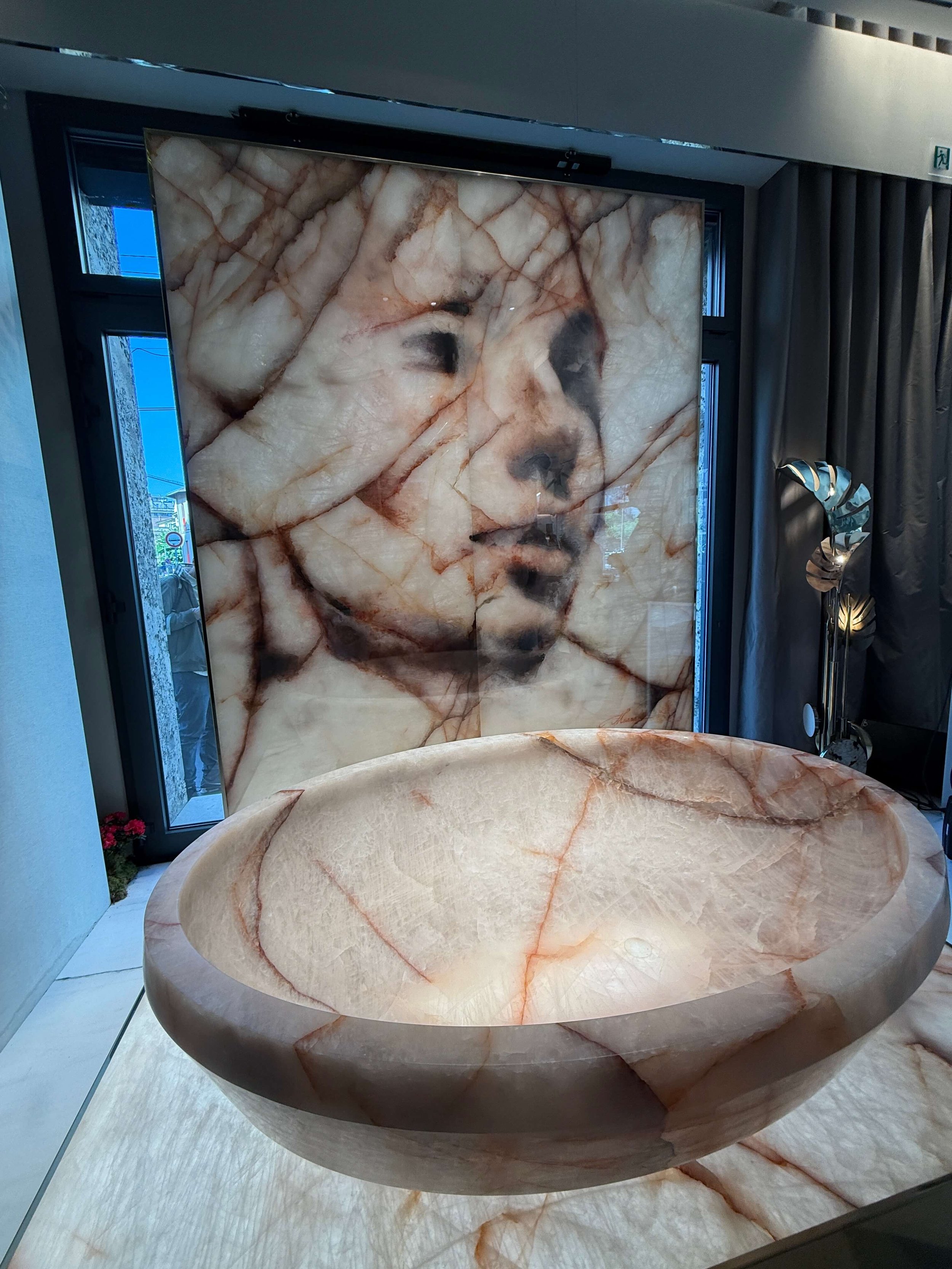
It was hung above a vessel made of the same stone — a solid, heavy piece that stood in deliberate contrast to the delicate image above it. Weight and fragility. Permanence and ethereality. From the same material. I was told that only one or two lines had been added by human hand. Everything else was already there.
That is where Antolini’s real skill begins — not in the cutting or the finishing, but in the looking. In knowing what’s already there before the hand touches it. In reading the material before deciding what to add. It is, in that sense, exactly how I approach a room.
"Only one or two lines had been added by human hand. Everything else was already there. Nature had drawn it. Millions of years before anyone thought to look."
Antolini is known for exclusive access to quarries but also for remarkable technical ability — creating surface textures that make stone behave like fabric or wood, hard surfaces that suggest softness, permanent materials that seem almost temporary in their delicacy.
What the Technique Reveals
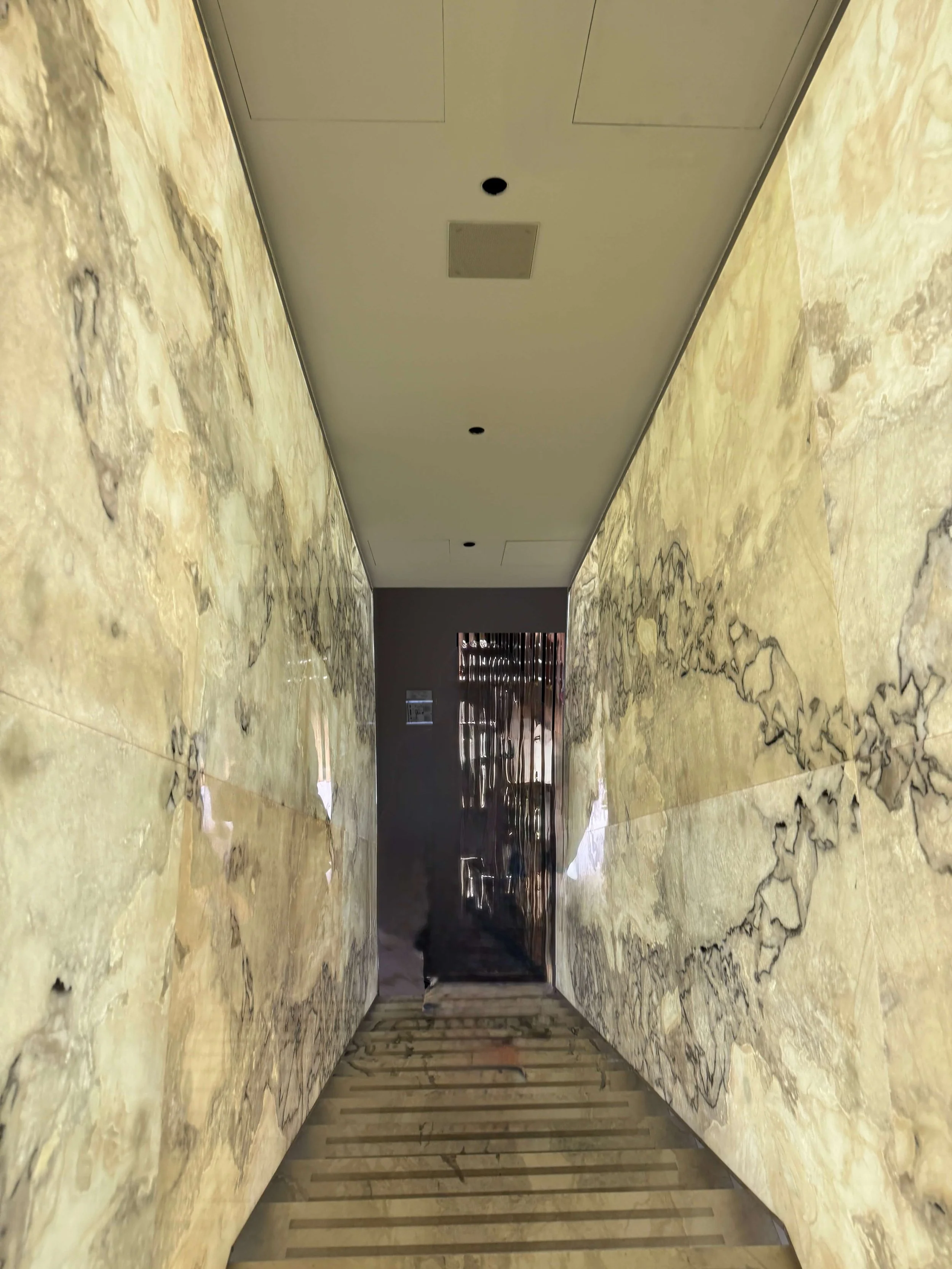
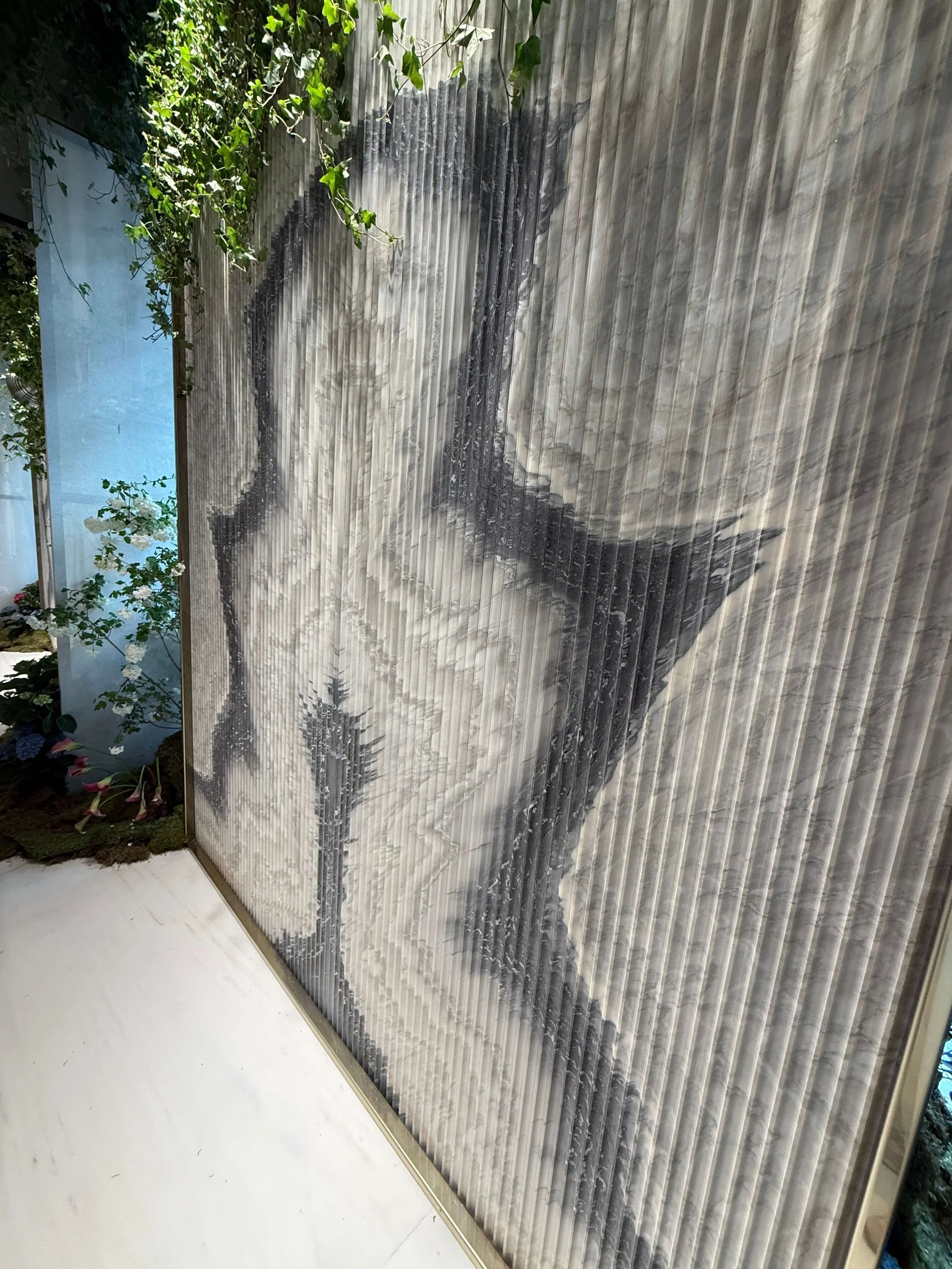
There were two specific pieces that illustrated the relationship between natural pattern and human technique. The first was a fluted wall — a stone with a very distinct natural abstract veining pattern, cut into three-dimensional fluting. Two completely different kinds of making occupying the same surface simultaneously. Geological time and a craftsman's precision in conversation.
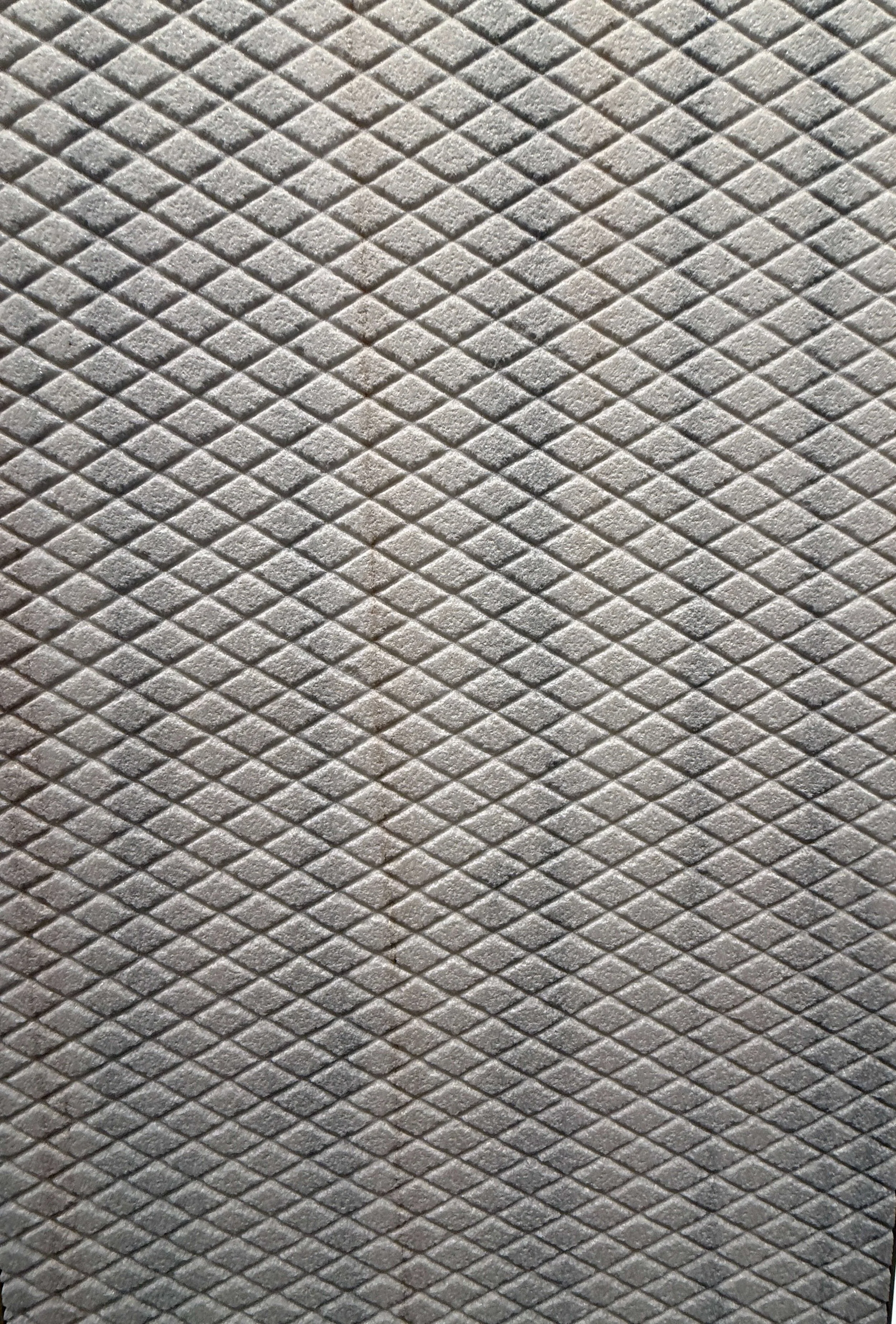
There were also samples of diamond patterns cut into stone faces, giving hard surfaces a quilted appearance — the material asked to suggest something it has never been.
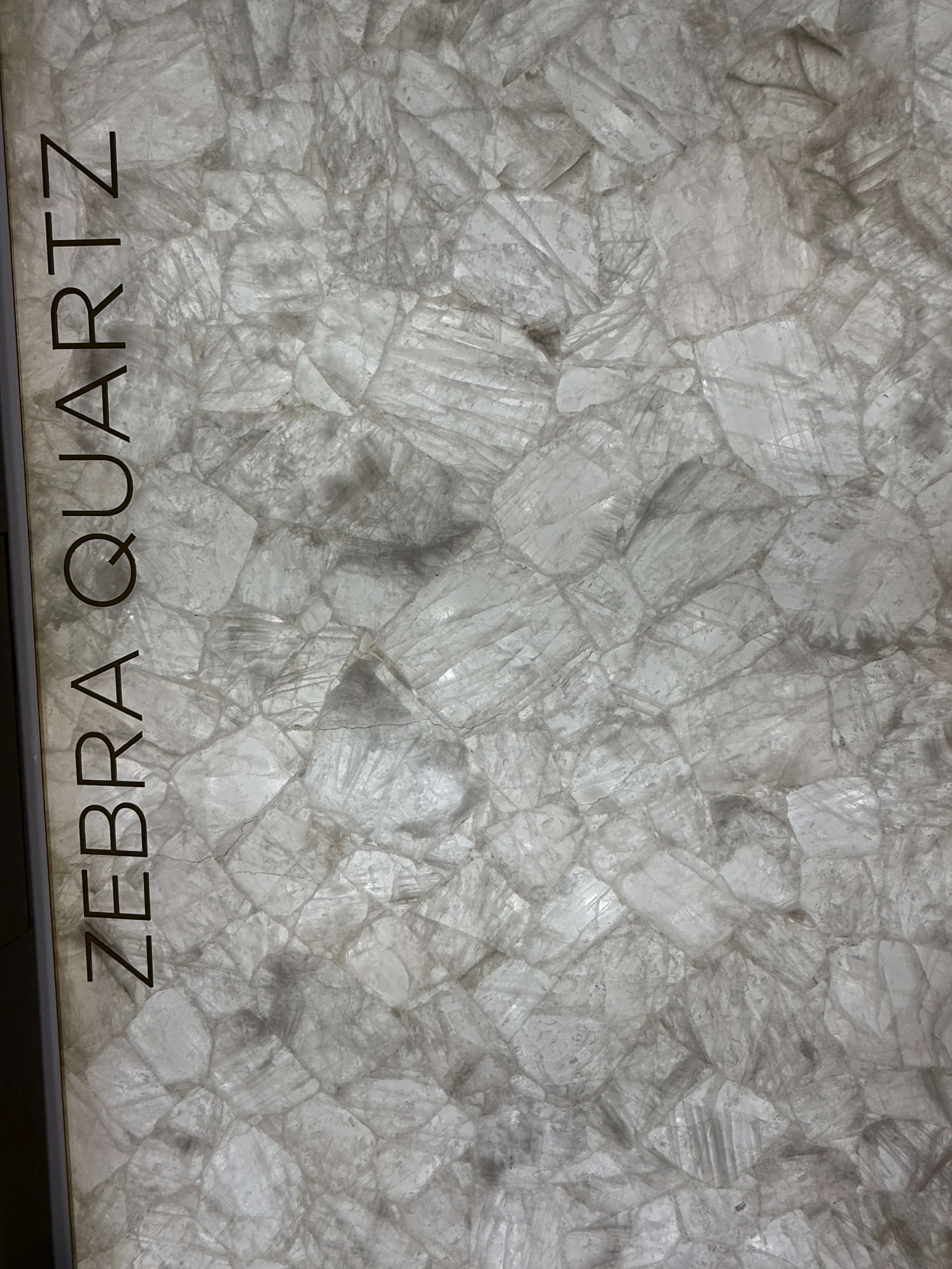
Then the collage technique. Zebra quartz — white and grey stone sliced into sections, combined and backlit. Soft and cool, almost alabaster but with cooler tones. The kind of piece that could work in an entry, a bathroom, even a bedroom. Quiet enough to live with. Extraordinary enough to remember.
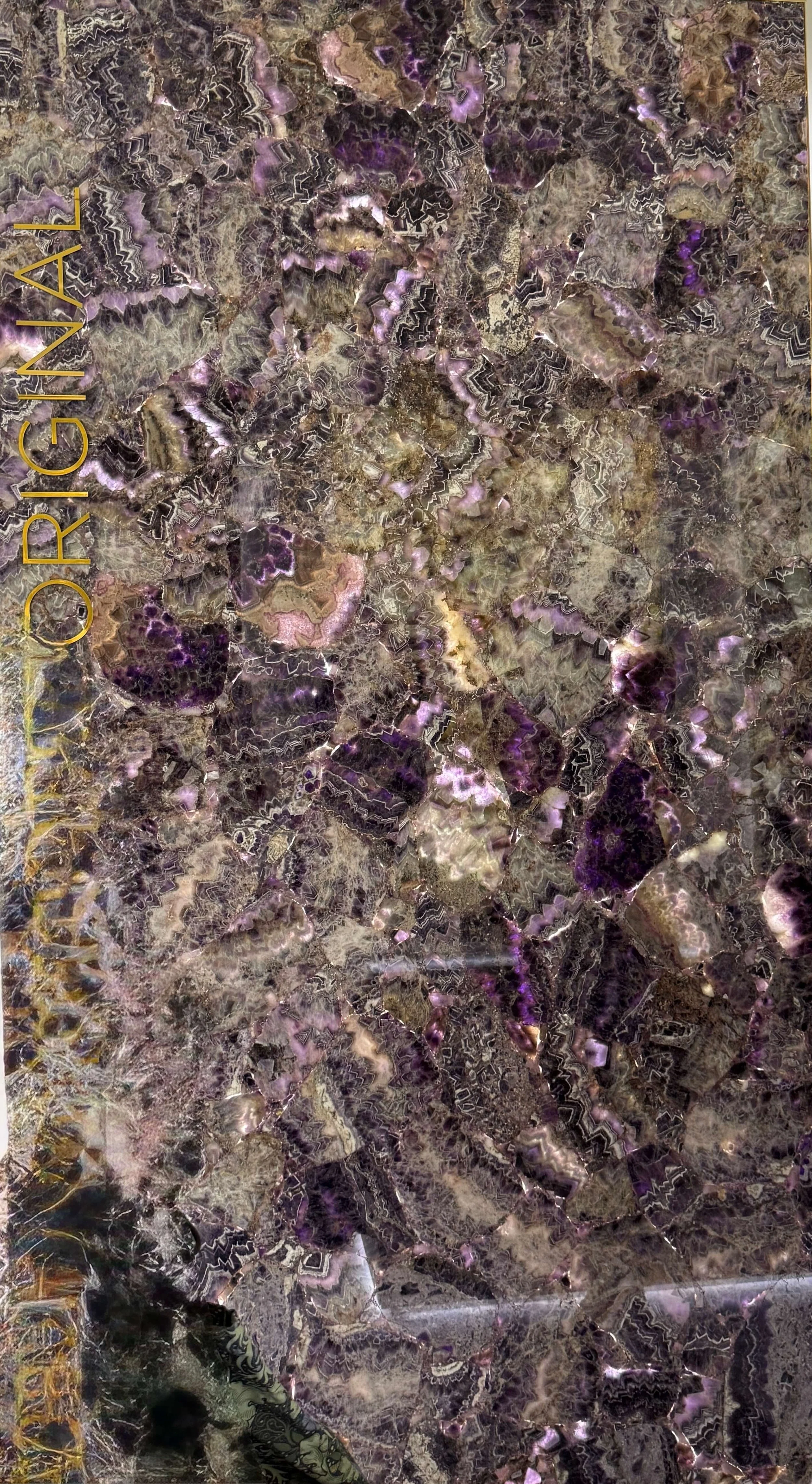
And then a version using an unusual purple stone with the slightest hint of green — the cross section cuts creating a zigzag line that recalled a bargello stitch from needlepoint. Same technique. Radically different result. Because the stone itself was different. The technique doesn't override the material. It converses with it.
The Quarry Is the Sketch
I once found the last three perfect slabs of a specific quartzite for a client’s kitchen. The fabricator couldn’t tell me when — or if — another cut would be made. We took them. That kitchen will never be replicated. Not because of the design. Because of the stone.
“That kitchen will never be replicated. Not because of the design. Because of the stone.”
Having access to things that are rare because of their very nature creates designs that can’t be copied. This is not faux scarcity. Mother nature has her production limits. Antolini has access to quarries with very limited material — restricted yield, exclusive partnerships, stones that exist in quantities the market will never saturate. In an era where everything is copied and replicated poorly and within an inch of its life, there is much to be said about being an “only.”
That urgency is not manufactured scarcity. It’s material reality. And it changes how a client relates to what they’re living with. A stone that came from one place on earth, cut from one specific seam, that will never exist again in exactly this way. That’s not a luxury detail. That’s a legacy material.
· · ·
Before any of this exists — the backlit face, the fluted wall, the last three slabs of quartzite nobody else will ever have — someone had to find it. In the right mountain. In a seam that took millions of years to form and will never form again in exactly this way. Someone had to know what they were looking for before they could bring it back.
The quarry is the sketch. The surface is the rendering. You can’t understand what a material can become until you understand where it came from. And you can’t design a room that feels irreplaceable if everything in it could have come from anywhere.
The right material first. The right room eventually. But only if you know where to look.
Get our free copy of ”Avoid These Seven Common Interior Design Mistakes, to Instantly Elevate Your Home”