What Salone Actually Taught Me
Milan · Milan Design Week 2026
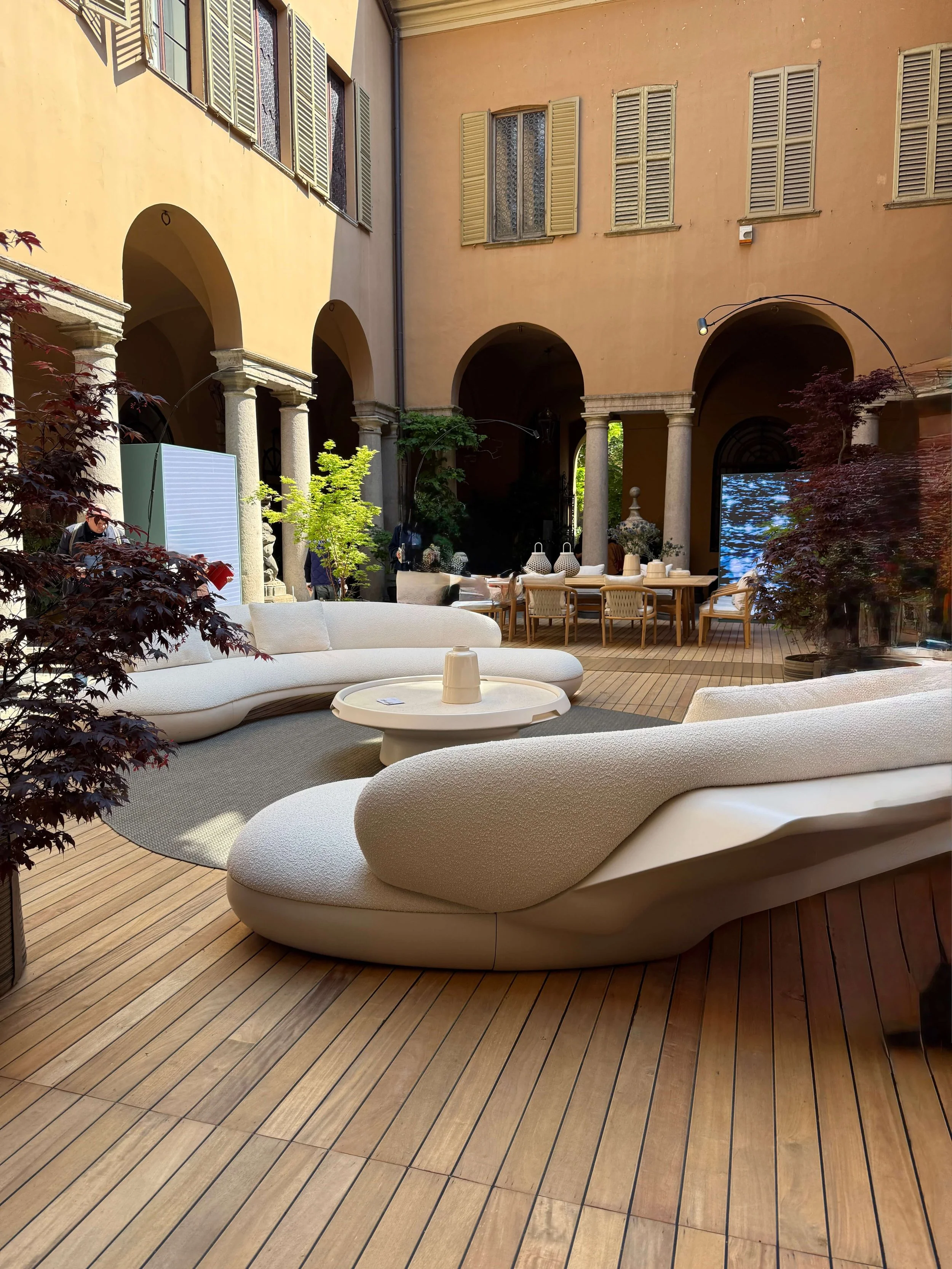
Poltrona Frau Palazzo Gallarti Scotti, Milan
What I Was Actually Looking For
I've been to enough design events to know what Salone is supposed to feel like. The scale. The spectacle. The sense that the entire design industry has gathered in one city to show you what's next. And it was all of those things. But the moments I'm still thinking about weeks later were none of those things.
Having attended so many trade shows in the US over so many years, I was in search of inspiration — something I have always had in abundance, having been lucky enough to live in fabulous cities and travel widely. But sometimes you need to shake things up. Do something just because. I knew there would be fabulous design. What I was really looking for was thoughtful design versus consumerism and mass production.
What touched me was remembering my design roots. Listening to designers and architects discuss their inspiration and process brought me back to architecture school — to the basic design courses that were some of the most challenging I ever took. We worked in abstractions. We weren't allowed to use the word "door." It was an opening, a penetration, a transition to another space.
It was genuinely difficult as a young designer getting her sea legs. And honestly it wasn't until years of practice later that my appreciation for those days really came into view. Milan brought it back. Seeing practitioners who still work this way — who still ask the questions, define the problem before creating a solution — was a great reminder in a day where everything is copied and replicated at the speed of social media.
· · ·
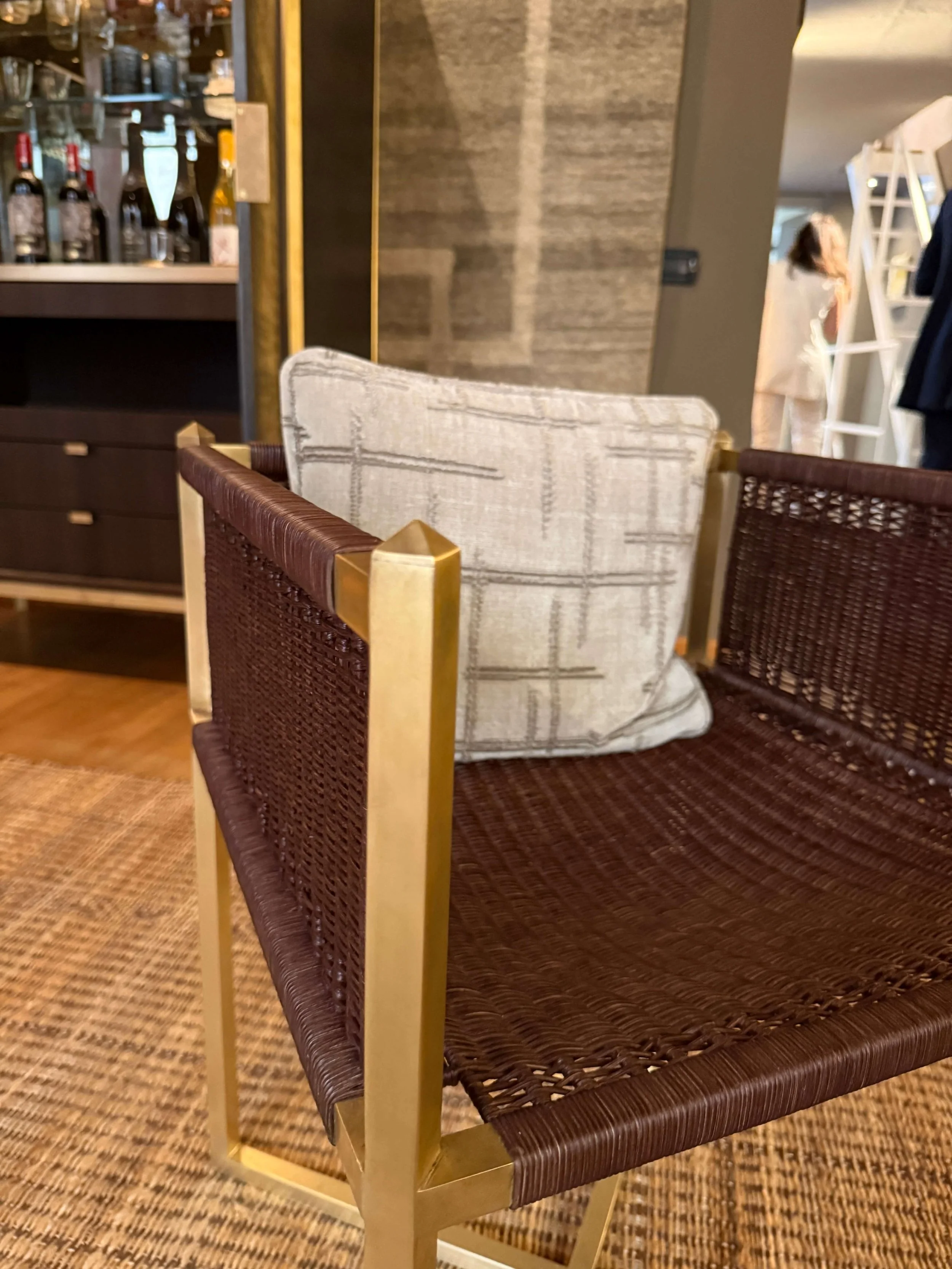
Marta Batianello Installation, Gallery Alberto Levi, Milan
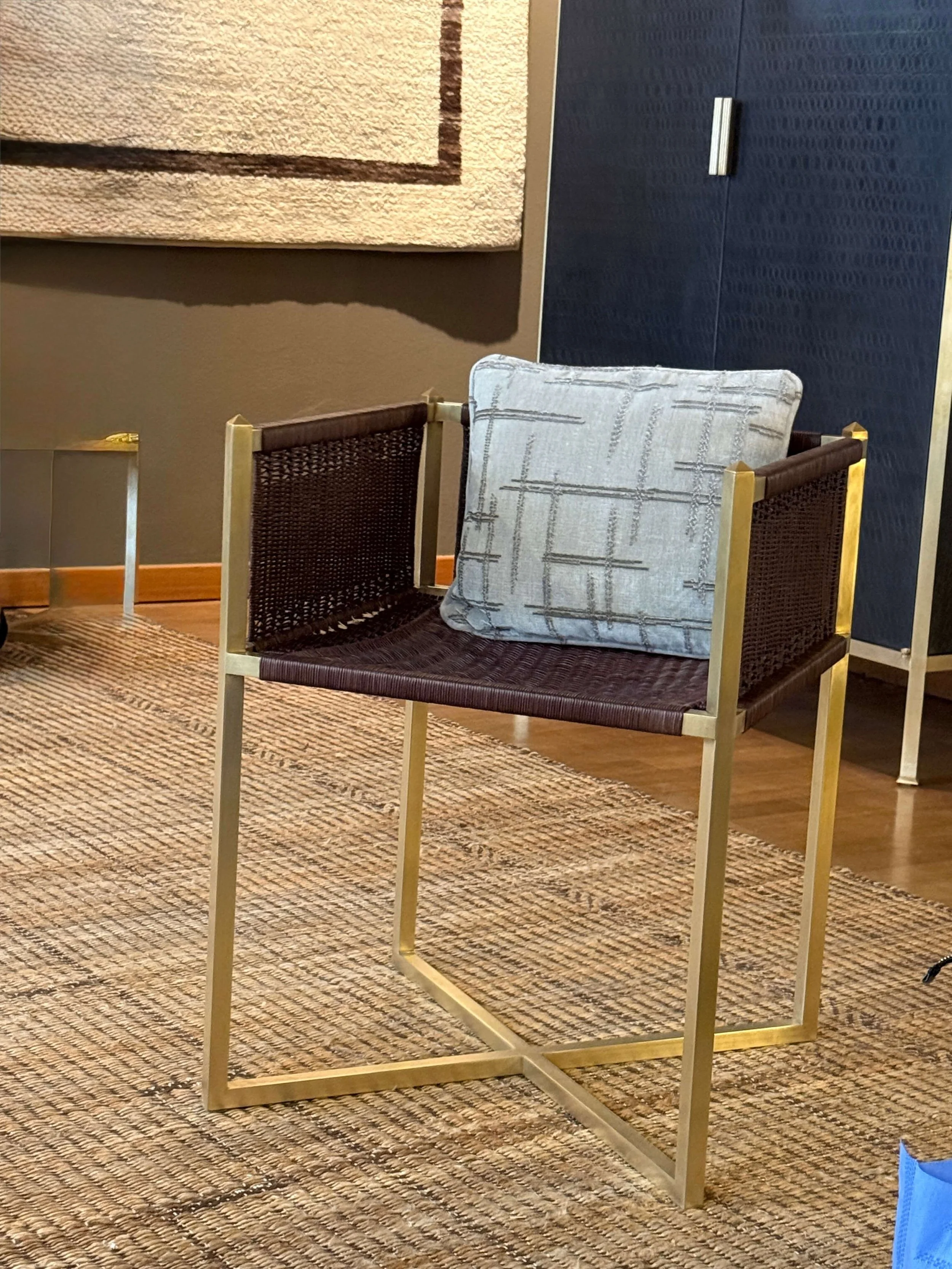
Marta Batianello Installation, Gallery Alberto Levi, Milan
When a Designer Shows You the Thinking
Gallery Alberto Levi. Monday evening of Design Week. Marta Bastianello describing the inspiration for her rug collection — Venice. After hearing her speak about her home city, it all made sense. The patterns on the rugs reflecting a plan view of St Mark's Square. Another rug an abstraction of the steps descending into the water — all of it obvious once she named it, invisible before she did.
And then the detail that made me stop. The brass tubing rotated 45 degrees that forms the frame for her dining chairs and tables. So simple. So considered. The kind of decision that only exists because someone asked the right question — not just what should this look like, but what should this material be allowed to become, and what should it look like doing it. It's more than how it looked. You understood how it came to be. That is the ultimate in design — marrying the concept with the material and the construction.
"One decision. Completely specific. The kind of thing you'd never notice unless someone told you — and once they do, you can't stop seeing it."
· · ·
The Light That Disappears
Thursday evening, aperitivo at the showroom of Davide Groppi — a lighting designer whose entire philosophy is built on the idea that the best light fixture is the one you don't notice. What you notice is what it illuminates. Functional simplicity taken to its logical conclusion. The fixture disappears. The light remains.
As a designer, lighting is crucial — without proper illumination, how do you experience a space? Many times light fixtures are chosen as the jewelry of the room. Groppi himself understands this — his Louis XIV chandelier, with its gold curlicues, crystal pieces, and little birds, announces itself with complete conviction. The chandelier that announces itself alongside the fixtures that disappear. The irony is entirely intentional.
But other times lighting needs to do the heavy lifting discreetly. His Vis-à-Vis — a lucite disc top resembling a clear ribbed LP — dissipates light downward onto a table surface without altering the ambience.
Anyone who has tried to read a menu by candlelight in a beautiful but badly lit restaurant knows exactly the problem this solves. He also showed elegant overhead solutions for historic buildings where installing ceiling fixtures would be impossible — systems so minimal some use adhesive strips to conduct electricity, the profile nearly invisible.
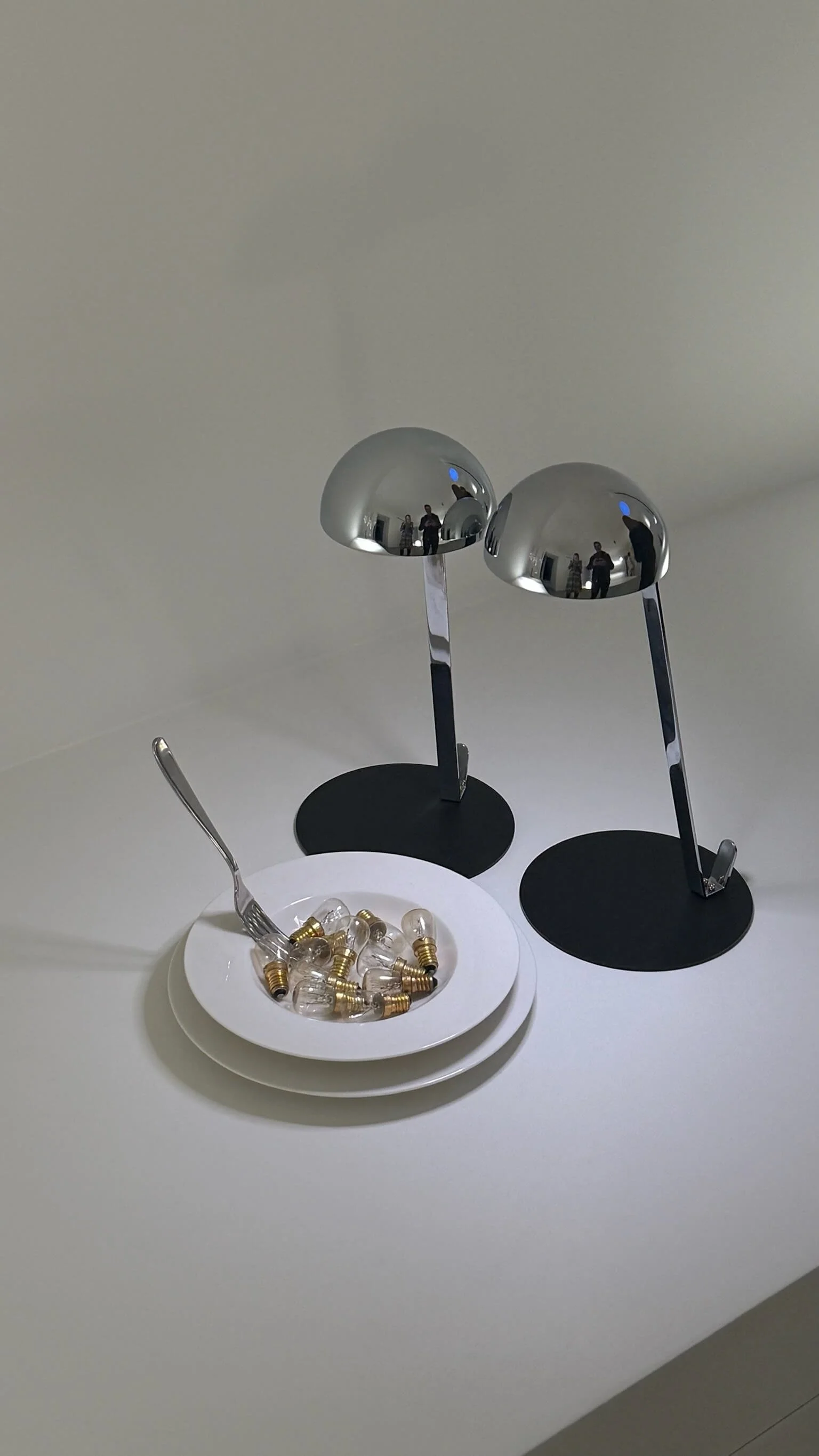
Post Prandium, Davide Groppe, Via Alessandro, Milan
And then Post Prandium — a fixture brought back in wireless form, literally inspired by a ladle. Elegant despite, or perhaps because of, its humor. A bowl of light bulb pasta. It reminded me of architecture school projects where we worked with humble everyday objects and asked what they could become. Groppi never stopped asking that question.
"The fixture should disappear. What you notice is what it illuminates. In a week full of spectacular statements, that quiet conviction was the loudest thing I heard."
· · ·
The Engineering Nobody Notices
Friday morning at the Rimadesio showroom was again an exercise in the subtlety of great design. Among other pieces — including a gorgeous dining chair made from a single piece of bent wood, much in the tradition of Thonet — there were the sliding bypass door systems designed so precisely that no floor track is needed. They stack cleanly. The floor stays uninterrupted. Nothing announces the mechanism. The engineering is completely hidden behind the result — a door that moves as if by intention rather than by hardware.
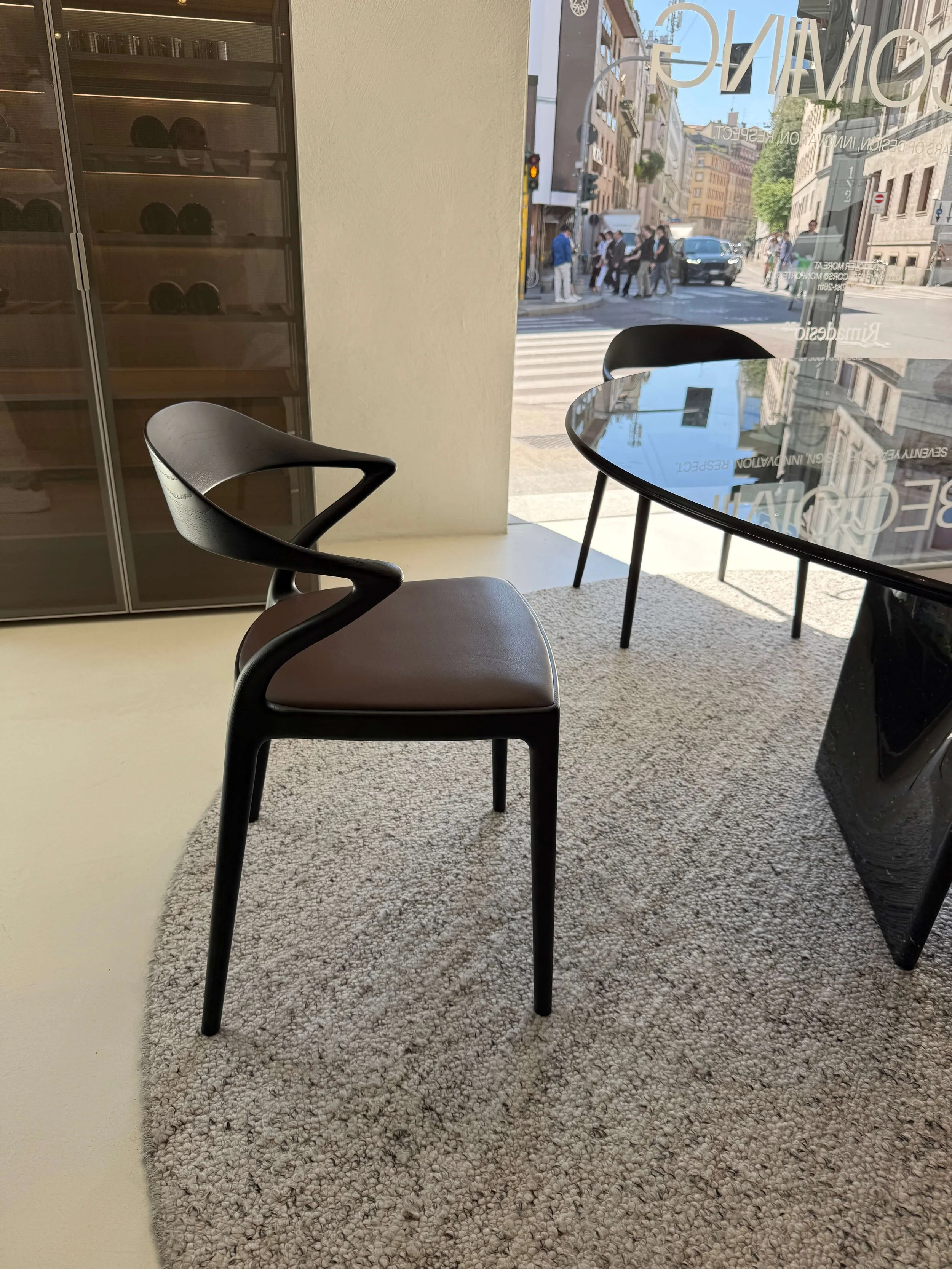
Rimadesio Showroom, Milan
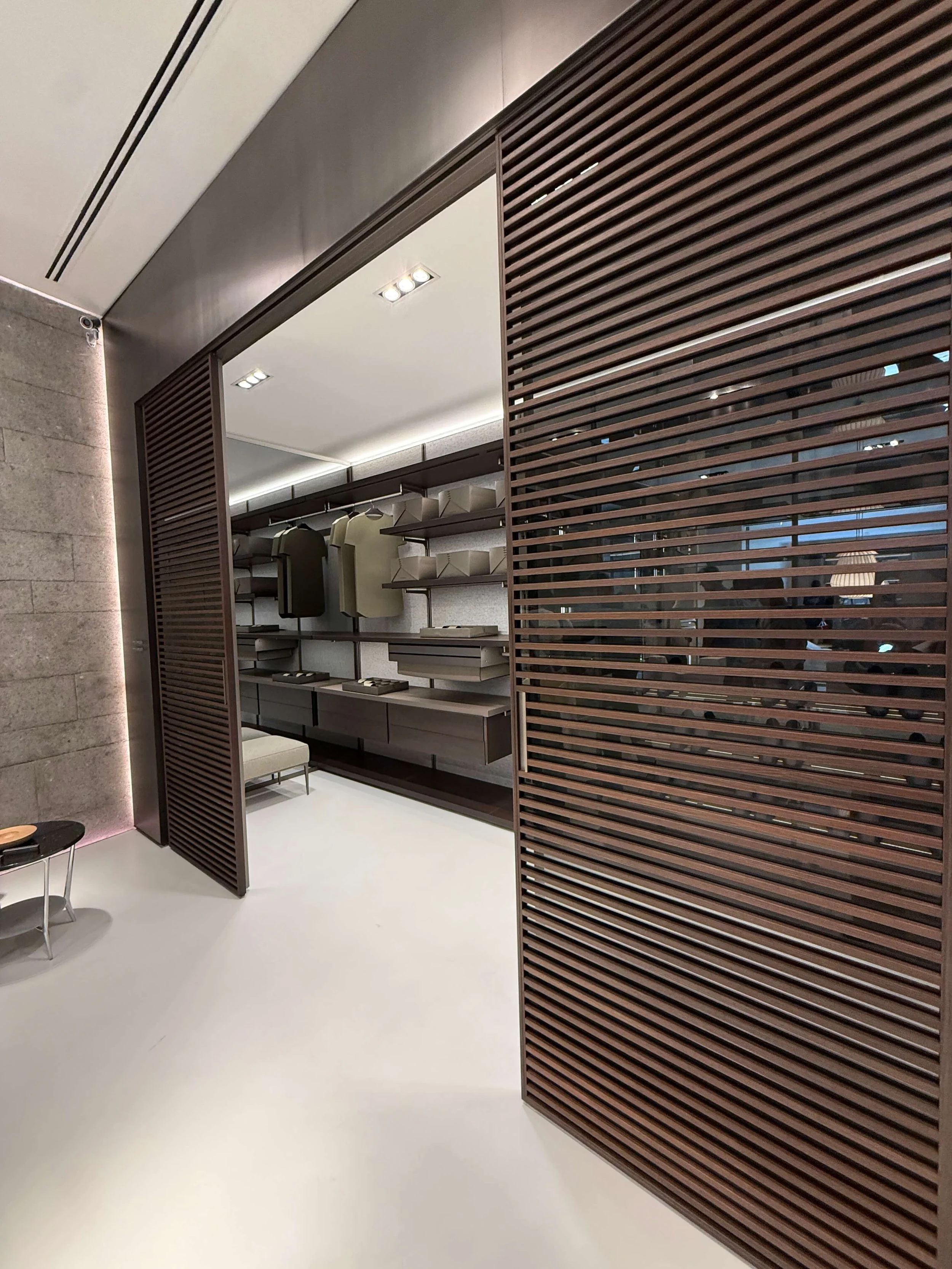
Rimadesio Showroom, Milan
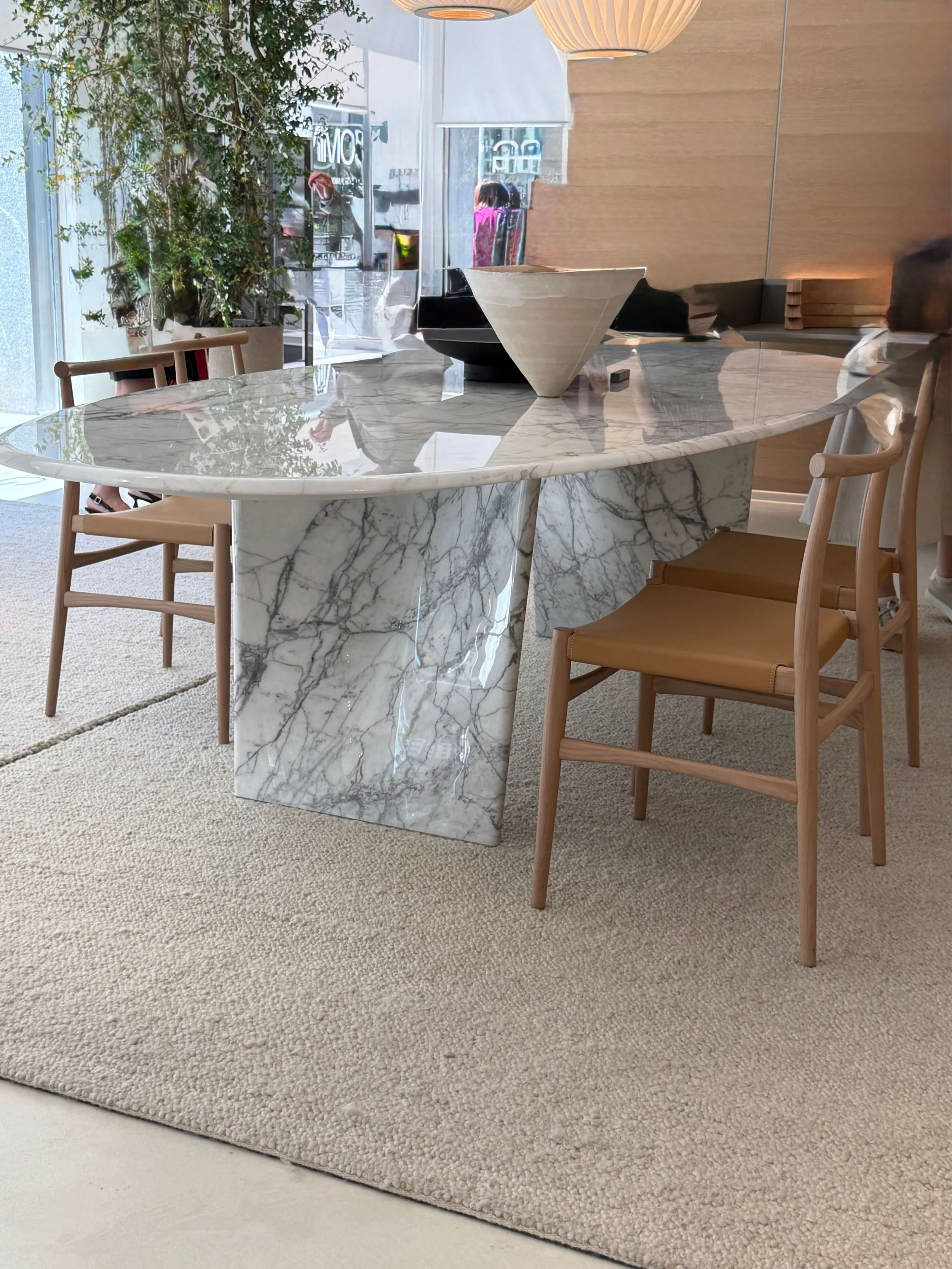
Rimadesio Showroom, Milan
This is the detail a contractor notices. That an architect specifies. That a client lives with for twenty years and never thinks about because it simply works, every time, and always looks timeless. Shown in beautifully designed closets, they would be equally extraordinary as architectural elements — a glass-enclosed scullery, a wine room, a conference space within a workplace. The application is endless precisely because the design gets out of its own way.
"Invisible quality is still quality. The best engineering is invisible. You only notice it when it's absent."
· · ·
Old Bones, New Thinking
One of the visual pleasures of Fuorisalone that no photograph fully captures — contemporary furniture installed in centuries-old palazzi. Frescoed ceilings above clean-lined sofas. Ancient stone floors beneath furniture that couldn't have existed before this century. The conversation between old and new that Milan does better than anywhere else in the world because it has no choice — the city is made of history and the design week happens inside it.
What this juxtaposition reveals is something important. Today's contemporary may become tomorrow's historic. Generations can exist in design harmony. It keeps design from feeling like a theme park and more like a curated expression — a reminder that it is not necessary to scrap everything and start with a clean slate. The objects we design exist in existing spaces. And that is so much more interesting than a blank one.
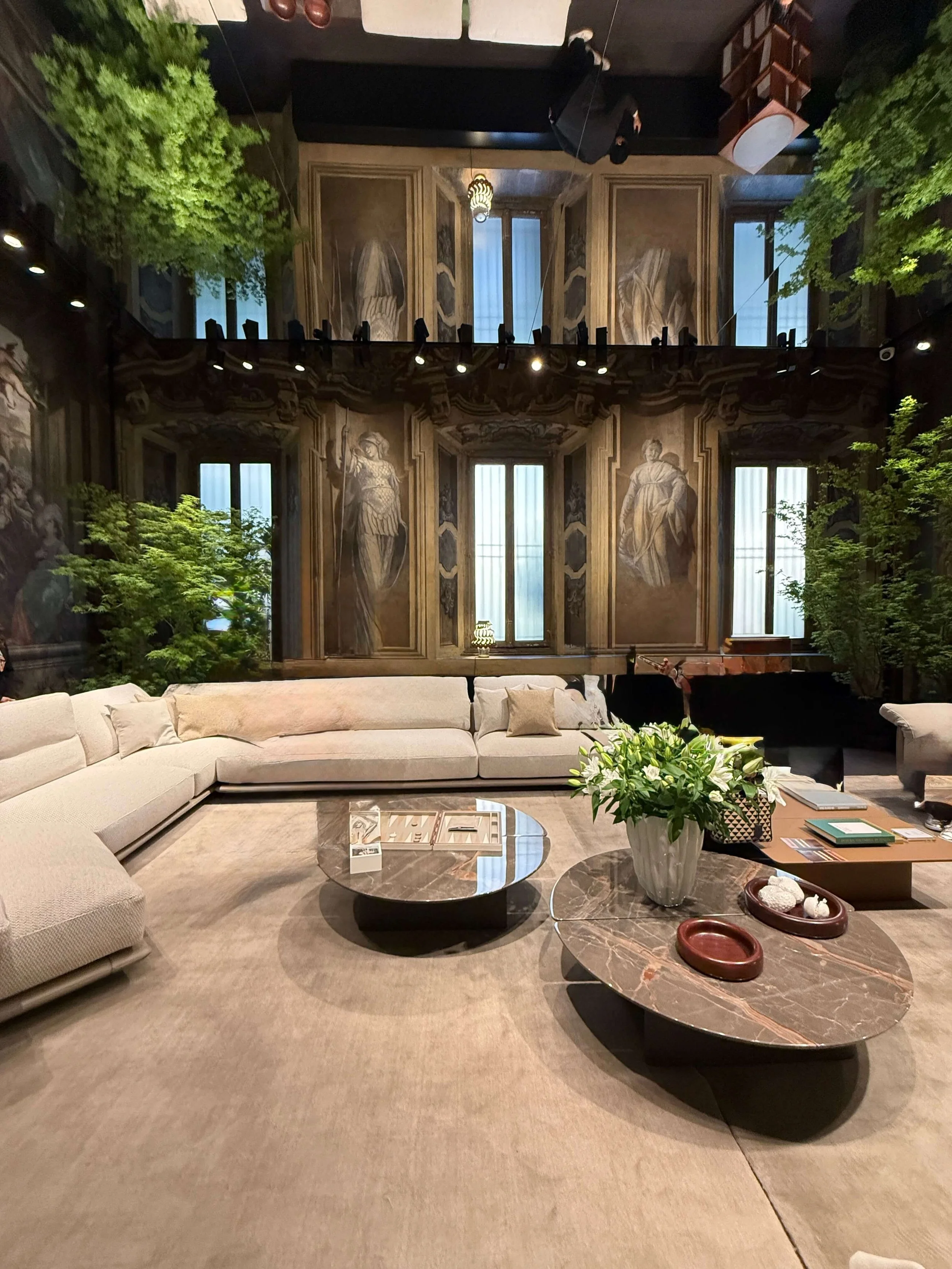
Poltrona Frau Palazzo Gallarti Scotti
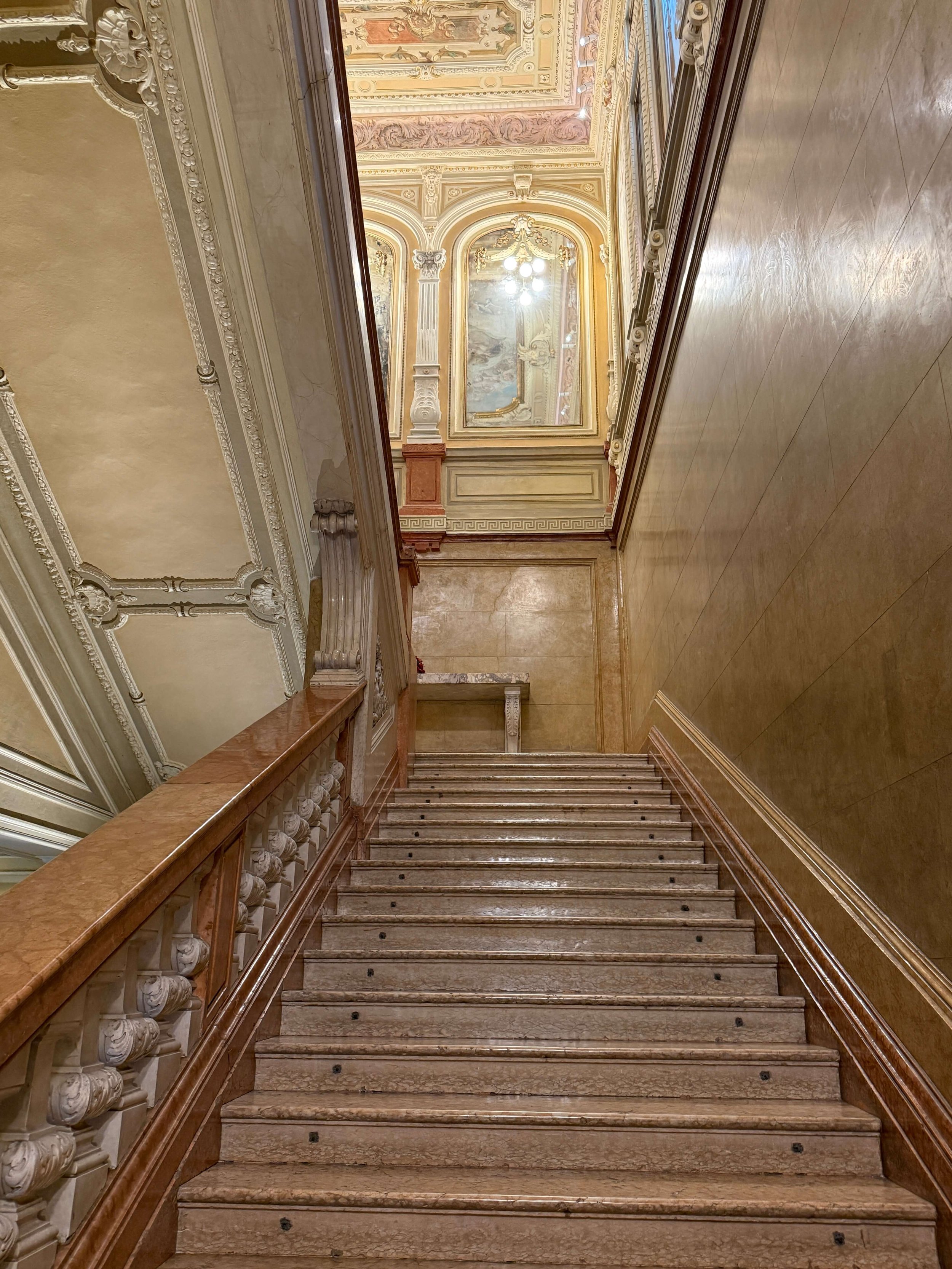
Bentley Home, Bugatti Home, Palazzo Chiesa, Milan
· · ·
When Design Becomes Performance
Not every moment of the week felt honest. Some of the largest and most heavily promoted installations felt less like design statements and more like brand activations — beautiful to photograph, less interesting to inhabit. The crowds they attracted were there for the content, not the conversation. Which is fine.
But it's a different thing. A trained eye can feel the difference within thirty seconds of walking into a room. The question isn't whether something is beautiful. It's whether it has anything to say beyond its own beauty. I love that spectacle can open eyes to people who don't live and breathe design — but it can also attract those interested only in their feed. That distinction matters.
· · ·
What I Brought Home
I came home from Milan not with a list of trends but with a recalibrated sense of what design is actually for. My creative well was filled. I was inspired by listening to designers who are still genuinely designing — not copying, not iterating on what already exists, but asking the questions that have always mattered.
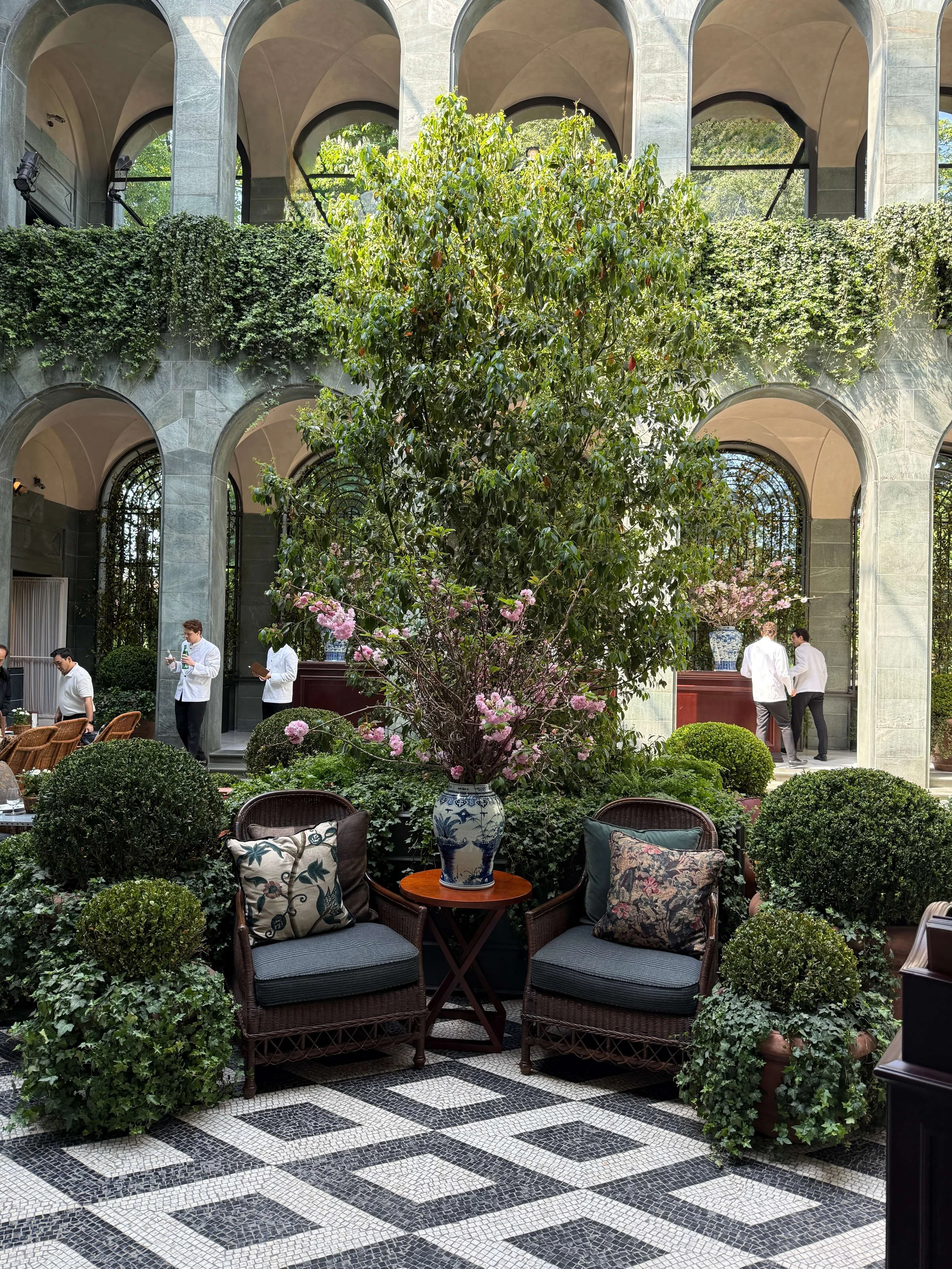
Ralph Lauren Home Palazzo(Casa Campanini-Bonomi), Milan
Design is in the details. Simplicity is always the more challenging part — and when done well it stands on its own. From the humble slipcovers at Villa Necchi Campiglio to the disappearing fixtures of Davide Groppi. The sliding doors at Rimadesio. The strong political stance made in silk at Rubelli. The rare stone slabs at Antolini with their fabric-like textures. All of it pointing at the same thing.
The right questions first. The right room eventually. That's what Milan reminded me. That's what I came home to practice.
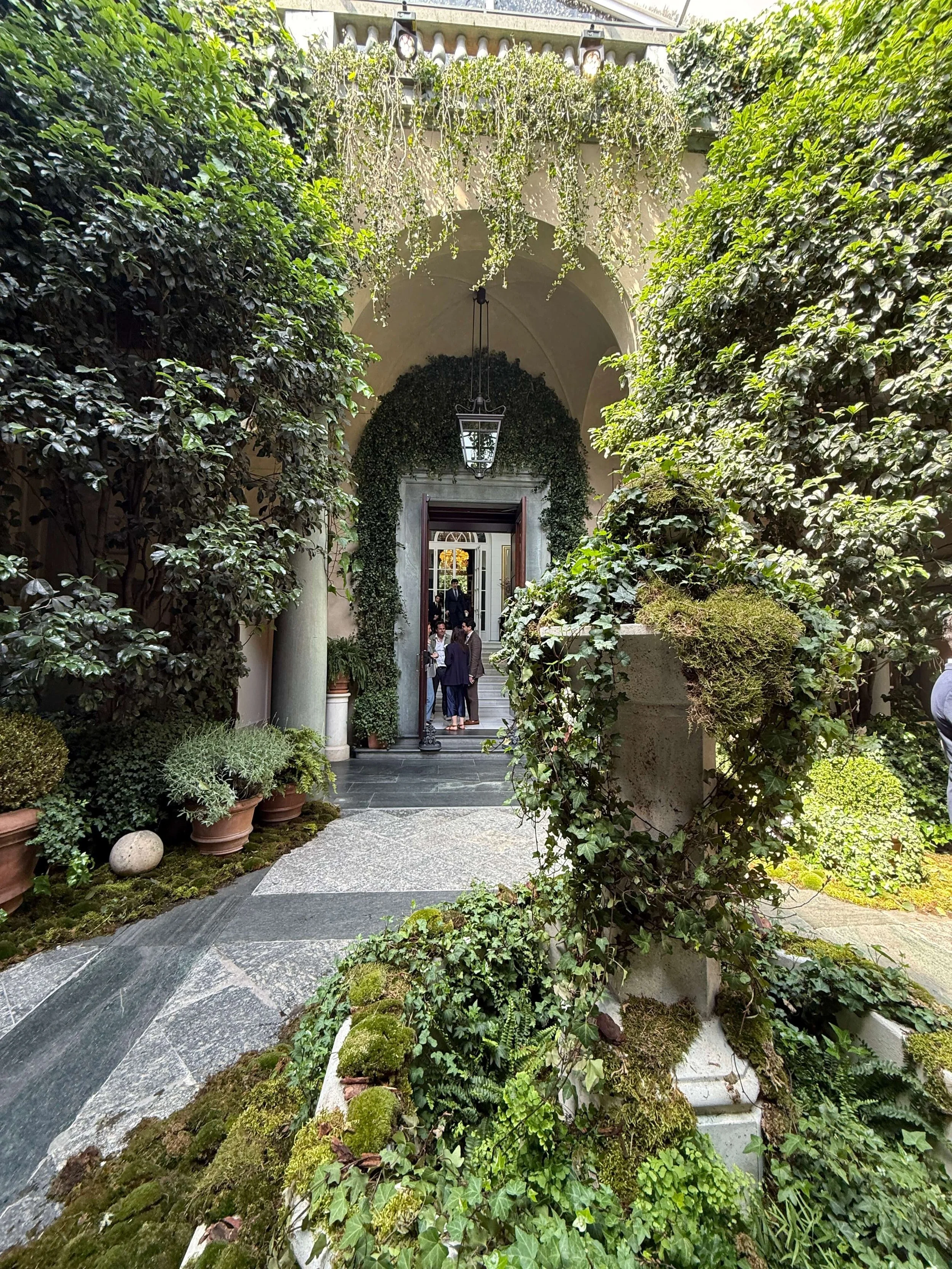
Ralph Lauren Palazzo (Casa Campanini-Bonomi), Milan
Get our free copy of ”Avoid These Seven Common Interior Design Mistakes, to Instantly Elevate Your Home”